يكشف ضرب روسيا لمجمع الأديرة الأوكراني العريق عمره قرون عن يأسها المتزايد
Russia’s strike on centuries-old Ukrainian monastery complex reveals its growing desperation
This attack has been widely understood as a Russian attempt to eradicate Ukrainian identity, and target a site that is extremely spiritually important to Ukrainians.
وقد فُهم هذا الهجوم على نطاق واسع باعتباره محاولة روسية للقضاء على الهوية الأوكرانية، واستهداف موقع ذي أهمية روحية قصوى للأوكرانيين.
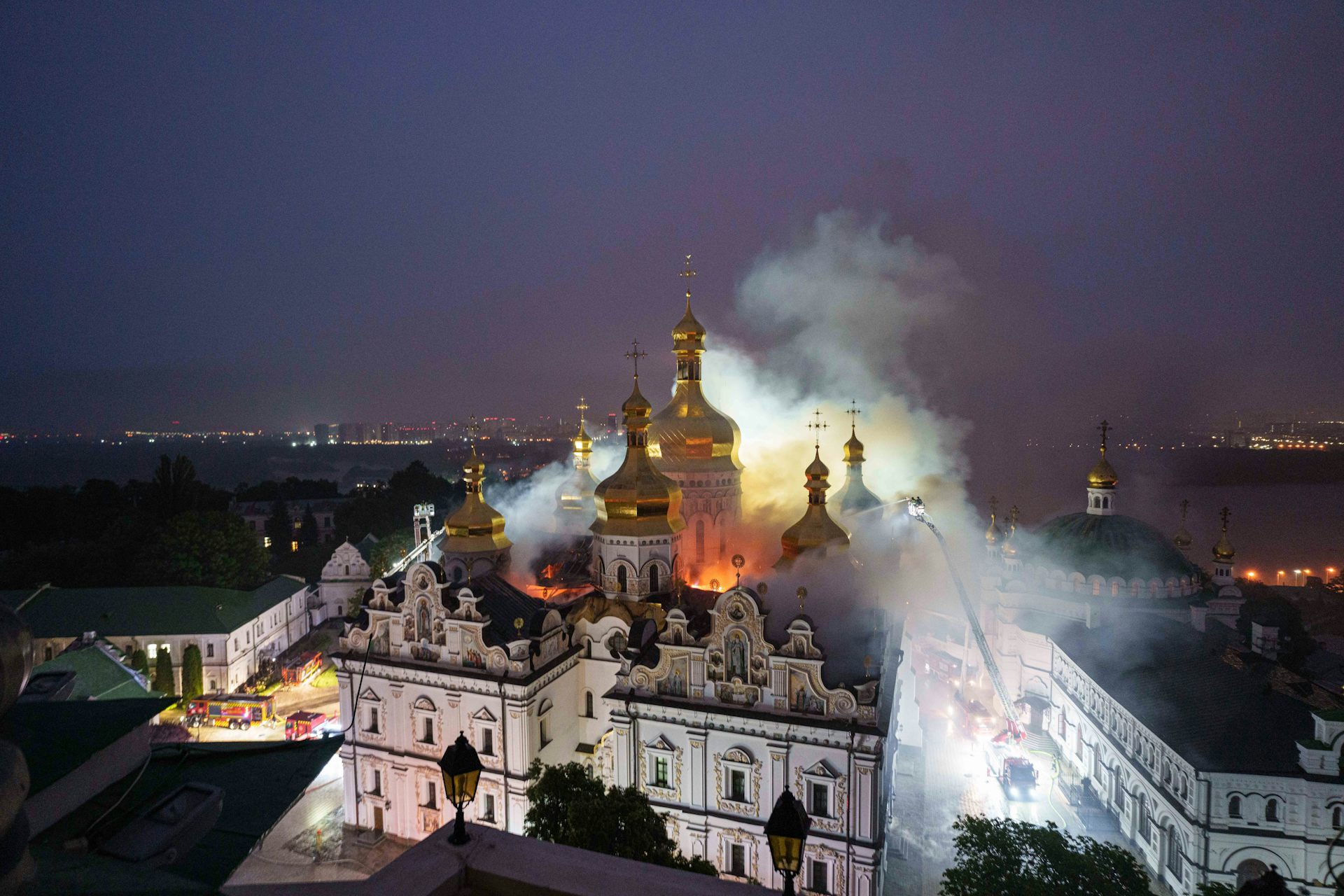
The historic Dormition Cathedral of the Kyiv-Pechersk Lavra was set ablaze this week, after it was struck by a Russian drone during a large-scale attack on the Ukrainian capital.
أُشعلت كاتدرائية السبات التاريخية في لاڤرا كييف-بيتشيرسك هذا الأسبوع، بعد أن ضربتها طائرة مسيّرة روسية خلال هجوم واسع النطاق على العاصمة الأوكرانية.
Monks, clergy, and rescuers rushed to carry out ancient and sacred items from the burning cathedral, which has served for centuries as a symbol of Ukrainian cultural identity.
هرع الرهبان ورجال الدين والمنقذون لإخراج القطع الأثرية والمقدسة من الكاتدرائية المشتعلة، التي خدمت لقرون كرمز للهوية الثقافية الأوكرانية.
This attack has been widely understood as a Russian attempt to eradicate Ukrainian identity, and target a site extremely spiritually important to Ukrainians. The cathedral was also damaged during a Russian attack earlier this year.
فُسِّر هذا الهجوم على نطاق واسع باعتباره محاولة روسية لمحو الهوية الأوكرانية، واستهداف موقع ذي أهمية روحية بالغة بالنسبة للأوكرانيين. كما تضررت الكاتدرائية خلال هجوم روسي في وقت سابق من هذا العام.
Russia’s ongoing targeting of Ukrainian heritage sites underscores its failures to make meaningful gains on the battle front. Targeting sites of religious and cultural importance suggests Russia is growing increasingly desperate to demoralise Ukrainian civilians and people of faith.
ويؤكد استهداف روسيا المستمر لمواقع التراث الأوكراني فشلها في تحقيق مكاسب ملموسة على الجبهات القتالية. ويشير استهداف المواقع ذات الأهمية الدينية والثقافية إلى أن روسيا تتزايد يأسًا لزعزعة معنويات المدنيين والأفراد المتدينين الأوكرانيين.
A site of Ukrainian heritage
موقع للتراث الأوكراني
The Kyiv-Pechersk Lavra site is a source of Ukrainian ancient heritage, Orthodox influence, and a refuge for the faithful.
يُعد موقع لافرا كييف-بيتشيرسك مصدرًا للتراث الأوكراني القديم، والتأثير الأرثوذكسي، وملاذًا للمؤمنين.
It was founded in 1051 by a monk named Anthony and his disciple Theodosius (both of whom went on to become saints) during the reign of Ukrainian leader Yaroslav the Wise.
تأسس عام 1051 على يد راهب يُدعى أنطوني وتلميذه ثيودوسيوس (الذي أصبح كلاهما قديسين) خلال فترة حكم الزعيم الأوكراني ياروسلاف الحكيم.
The Kyiv-Pechersk Lavra is the oldest monastic complex of Kyivan Rus, the first East Slavic state.
تُعد لافرا كييف-بيتشيرسك أقدم مجمع رهباني في روس كييف، وهي أول دولة سلافية شرقية.
The complex’s gradual expansion over the centuries was funded by various leaders of Kyivan Rus and beyond.
تم تمويل التوسع التدريجي للمجمع على مر القرون من قبل العديد من قادة روس كييف وخارجها.
The construction of the Dormition Cathedral was completed in 1078, but the site was damaged several times during conquests in the region, such as the Golden Horde siege of Kyiv in the 13th century. This was when the city was attacked by a vast army of Mongol raiders.
اكتمل بناء كاتدرائية السبات في عام 1078، لكن الموقع تعرض لأضرار عدة مرات خلال الفتوحات في المنطقة، مثل حصار القوة الذهبية لكييف في القرن الثالث عشر. وفي ذلك الوقت، هاجمت المدينة جيش ضخم من الغزاة المغول.
A spectacular feature of the sacred Kyiv-Pechersk Lavra site is its vast underground network of caves (in fact, the word “pechersk” derives from the Ukrainian word pechery, which translates to “caves”) . The caves were a holy site of retreat for monks who lived and prayed at the monastery. The most worthy and devoted were buried there.
من السمات الرائعة لموقع لافرا كييف-بيتشيرسك المقدس هي شبكته الكهفية الشاسعة تحت الأرض (في الواقع، مشتق كلمة “بيتشيرسك” من الكلمة الأوكرانية “بيتشيري”، والتي تعني “الكهوف”) . كانت هذه الكهوف موقعًا مقدسًا للانسحاب الرهباني للرهبان الذين عاشوا وصلّوا في الدير. وقد دُفن فيها الأكثر استحقاقاً وتفانياً.
The site also holds many ancient religious texts, publications, woodwork, and iconography. Over centuries, monks and other people used this site as a base to spread Orthodox faith in the region, and it served as a place of holy refuge for the Orthodox monks.
يحوي الموقع أيضًا العديد من النصوص الدينية القديمة، والمنشورات، والأعمال الخشبية، والأيقونات. على مر القرون، استخدم الرهبان وغيرهم هذا الموقع كقاعدة لنشر الإيمان الأرثوذكسي في المنطقة، وخدم كملاذ مقدس للرهبان الأرثوذكس.
Today, parts of the sacred site continue to be used as a consecrated space for religious practice, especially the Dormition Cathedral. Most importantly, for many Ukrainians the Kyiv-Pechersk Lavra serves as a testament of Ukraine being descended from Kyivan Rus, not modern Russia.
اليوم، لا تزال أجزاء من الموقع المقدس تُستخدم كمكان مكرس للممارسة الدينية، وخاصة كاتدرائية السبات. والأهم من ذلك، بالنسبة للعديد من الأوكرانيين، تعمل لافرا كييف-بيتشيرسك كدليل على أن أوكرانيا تنحدر من روس كييف وليس روسيا الحديثة.
While Ukraine and Russia have shared a common history at some point on the timeline, the Russian empire, the Soviet Union, and today’s Russia have made attempts to claim Kyivan Rus history as their own. But many Ukrainians see this monastery site as symbolising a rejection of that monolithic version of history.
وبينما تشاركت أوكرانيا وروسيا تاريخًا مشتركًا في مرحلة ما من الجدول الزمني، فقد حاولت الإمبراطورية الروسية والاتحاد السوفيتي وروسيا اليوم الادعاء بتاريخ روس كييف باعتباره ملكها. لكن العديد من الأوكرانيين يرون أن هذا الموقع الرهباني يرمز إلى رفض تلك النسخة الأحادية للتاريخ.
A church split
انشقاق كنيسة
My expertise and experience is in researching Ukrainian religious history. For me, the complex’s survival and being should be understood as a symbol of Ukrainian historical and current resistance against Russian oppression.
تكمن خبرتي وخبراتي في البحث في التاريخ الديني الأوكراني. بالنسبة لي، يجب فهم بقاء المجمع وتواجده على أنه رمز للمقاومة التاريخية والحالية الأوكرانية ضد القمع الروسي.
The rise of Russian Orthodox authority, Russian tsarist expansionism, and Russification policies all played a big role in Ukrainian oppression over centuries.
لعب صعود السلطة الأرثوذكسية الروسية والتوسع القيصري الروسي وسياسات الترقيع (الروسنة) جميعها دوراً كبيراً في قمع أوكرانيا على مدى قرون.
Constantinople, the centre of Orthodoxy, formally approved Russian authority over Ukrainian Orthodoxy in 1686. This was only overturned in 2019, after which a new Orthodox church in Ukraine gained formal independence from Moscow.
أقرت القسطنطينية، مركز الأرثوذكسية، رسمياً بالسلطة الروسية على الأرثوذكسية الأوكرانية عام 1686. لم يتم إلغاء هذا الأمر إلا في عام 2019، وبعد ذلك اكتسبت كنيسة أرثوذكسية جديدة في أوكرانيا استقلالاً رسمياً عن موسكو.
In other words, Russian control of Ukrainian religious identity went on for more than three centuries.
بعبارة أخرى، استمر التحكم الروسي بالهوية الدينية الأوكرانية لأكثر من ثلاثة قرون.
So it should be no surprise Russia is now targeting sites such as this cathedral. It is part of a longstanding effort on Russia’s part to eradicate Ukrainian religious identity.
لذلك، لا ينبغي أن يكون من المستغرب أن تستهدف روسيا الآن مواقع مثل هذا الصرح الكنسي. إنه جزء من جهد طويل الأمد من جانب روسيا للقضاء على الهوية الدينية الأوكرانية.
Holy battleground
ساحة المعركة المقدسة
The last time the ancient monastery complex experienced vast ruin was in 1941, during occupation by Nazi Germany. At this time, it was destroyed by mines believed to be left by Soviet forces who were retreating from the Nazis.
آخر مرة تعرض فيها مجمع الدير القديم لدمار واسع كانت في عام 1941، خلال الاحتلال النازي لألمانيا. في ذلك الوقت، دُمرت المنطقة بقذائف ألغام يُعتقد أنها تركتها القوات السوفيتية التي كانت تتراجع من النازيين.
The Kyiv-Pechersk Lavra complex gained UNESCO World Heritage List status in 1990. Then, the Dormition Cathedral was rebuilt from 1998 to 2000 by the Ukrainian government.
اكتسب مجمع كييف-بيتشيرسك لافرا صفة التراث العالمي لمنظمة اليونسكو عام 1990. بعد ذلك، أُعيد بناء كاتدرائية السبات (Dormition) في الفترة ما بين 1998 و 2000 من قبل الحكومة الأوكرانية.
From 1988, the Kyiv-Pechersk Lavra was used by the modern Ukrainian Orthodox Church of the Moscow Patriarchate on the basis of lease grants.
منذ عام 1988، استخدم مجمع كييف-بيتشيرسك لافرا من قبل الكنيسة الأرثوذكسية الأوكرانية التابعة لبطريركية موسكو على أساس منح الإيجار.
From 2009 onward (after a leadership change in the Russian Orthodox Church) , Russia began to explicitly tie religious politics to neo-imperialist state ideology. Russia’s occupation of parts of the Pechersk-Lavra site was about controlling Ukrainian self-determination and religious freedom.
اعتباراً من عام 2009 فصاعداً (بعد تغيير القيادة في الكنيسة الأرثوذكسية الروسية) ، بدأت روسيا بربط السياسة الدينية بشكل صريح بالأيديولوجية الحكومية النيو-إمبريالية. كان احتلال روسيا لأجزاء من موقع بيتشيرسك-لافرا يتعلق بالسيطرة على تقرير المصير والحريات الدينية الأوكرانية.
But as of January 2023, all worship in the monastery has been conducted under the Orthodox Church of Ukraine (which split from Moscow in 2019) .
ولكن اعتباراً من يناير 2023، أُجريت جميع العبادات في الدير تحت إشراف الكنيسة الأرثوذكسية في أوكرانيا (التي انفصلت عن موسكو عام 2019) .
Targeting the Kyiv-Pechersk Lavra this week was no coincidence. Russia’s Orthodox Church under the leadership of Patriarch Kirill has described the invasion of Ukraine as a “holy war”.
لم يكن استهداف كييف-بيتشيرسك لافرا هذا الأسبوع مصادفة. فقد وصفت الكنيسة الأرثوذكسية الروسية، تحت قيادة البطريرك كيريل، غزو أوكرانيا بأنه “حرب مقدسة.”
Yury Dolgoruky, Prince of Kyivan Russia and founder of Moscow, is said to be buried at this site. But even that did not deter Russia from attacking it.
يُقال إن يوري دولغوركي، أمير روسيا كييف وأحد مؤسسي موسكو، مدفون في هذا الموقع. ولكن حتى ذلك لم يردع روسيا عن مهاجمته.
The bombing of this sacred site demonstrates growing urgency on Russia’s part to erase Ukrainian history and identity.
يُظهر قصف هذا الموقع المقدس إلحاحاً متزايداً من جانب روسيا لمحو التاريخ والهوية الأوكرانية.
Anastasiya Byesyedina does not work for, consult, own shares in or receive funding from any company or organisation that would benefit from this article, and has disclosed no relevant affiliations beyond their academic appointment.
أناستاسيا بييسيدينا لا تعمل لدى أو تستشير أو تمتلك حصصاً في أي شركة أو منظمة، ولا تتلقى التمويل منها، وأفصحت عن عدم وجود أي ارتباطات ذات صلة بخلاف منصبها الأكاديمي.
Read more
-

يمكن لإنستغرام الآن قراءة جميع الرسائل الخاصة للمستخدمين. هل سيجعل هذا الأطفال أكثر أمانًا أم سيعزز فقط استهداف الإعلانات؟
Instagram can now read all users’ private messages. Will this make kids safer or just boost ad targeting?
-

ما هي “الاستقلالية الاستراتيجية” – ولماذا يتجه الجميع إليها فجأة؟
What is ‘strategic autonomy’ – and why is everyone suddenly reaching for it?