Poeira estelar aprisionada no gelo antártico revela dezenas de milhares de anos do passado do Sistema Solar
Stardust trapped in Antarctic ice reveals tens of thousands of years of Solar System’s past
We can study the cosmos by tracing debris from exploding stars right here on Earth.
Podemos estudar o cosmos rastreando detritos de estrelas que explodiram bem aqui na Terra.
When you think of outer space, you’re likely picturing stars, planets and moons. But much of space is filled with clouds of gas, plasma and stardust – known as interstellar clouds.
Quando você pensa no espaço exterior, é provável que esteja imaginando estrelas, planetas e luas. Mas grande parte do espaço é preenchido com nuvens de gás, plasma e poeira estelar – conhecidas como nuvens interestelares.
In the local parts of our galaxy alone there’s a complex of roughly 15 individual interstellar clouds. The Solar System is currently traversing one of them, aptly named the Local Interstellar Cloud. The origin and history of these clouds are believed to be tightly connected to the birth and death of stars. But we can see their imprints right here on Earth, in a place you might not expect – Antarctic ice.
Somente nas partes locais da nossa galáxia existe um complexo de aproximadamente 15 nuvens interestelares individuais. O Sistema Solar está atualmente atravessando uma delas, apelidada de Nuvem Interestelar Local. A origem e a história dessas nuvens são acreditadas estar intimamente ligadas ao nascimento e morte das estrelas. Mas podemos ver suas marcas aqui na Terra, em um lugar que você talvez não espere – o gelo da Antártida.
My colleagues and I have been studying stardust trapped in old Antarctic snow and ice to trace the history of our solar neighbourhood, including the Solar System itself.
Meus colegas e eu temos estudado poeira estelar aprisionada na neve e no gelo antigos da Antártida para rastrear a história do nosso vizinho solar, incluindo o Sistema Solar em si.
In a new study published in Physical Review Letters, we found a subtle clue that reveals our Solar System’s movement through the local interstellar environment over the past 80,000 years.
Em um novo estudo publicado na Physical Review Letters, encontramos uma pista sutil que revela o movimento do nosso Sistema Solar através do ambiente interestelar local ao longo dos últimos 80.000 anos.
Looking down to see the sky
Olhando para baixo para ver o céu
Astronomy usually looks outward. Telescopes collect light from distant stars and galaxies, allowing us to observe events across vast stretches of space and time. From these observations, we infer how stars live and die, how elements are formed, and how the universe evolves.
A astronomia geralmente olha para fora. Os telescópios coletam luz de estrelas e galáxias distantes, permitindo-nos observar eventos ao longo de vastas extensões de espaço e tempo. A partir dessas observações, inferimos como as estrelas vivem e morrem, como os elementos são formados e como o universo evolui.
Our approach turns that idea on its head.
Nossa abordagem inverte essa ideia.
Instead of observing the light coming to us, we study the debris of exploding stars right here on Earth. As cosmic furnaces, stars forge many elements in their cores, from carbon and oxygen to calcium and iron. This includes rare isotopes (variants of chemical elements) such as iron-60.
Em vez de observar a luz que nos chega, estudamos os detritos de estrelas que explodem bem aqui na Terra. Como fornos cósmicos, as estrelas forjam muitos elementos em seus núcleos, do carbono e oxigênio ao cálcio e ferro. Isso inclui isótopos raros (variantes de elementos químicos) como o ferro-60.
When massive stars explode into supernovae at the end of their life, these elements are ejected into space and become interstellar dust.
Quando estrelas massivas explodem em supernovas no fim de suas vidas, esses elementos são ejetados para o espaço e se tornam poeira interestelar.
Tiny grains of this dust then drift through the galaxy and occasionally find their way to Earth’s surface. Radioactive iron-60, a fingerprint of stellar explosions, is embedded within these grains. By searching for these atoms in geological archives on Earth, we can probe astrophysical events like supernovae long after their light has faded.
Grãos minúsculos dessa poeira então flutuam pela galáxia e ocasionalmente encontram seu caminho até a superfície da Terra. O ferro-60 radioativo, uma impressão digital das explosões estelares, está incorporado a esses grãos. Ao procurar esses átomos em arquivos geológicos na Terra, podemos investigar eventos astrofísicos como supernovas muito tempo depois que sua luz desapareceu.
This is why Antarctica is so valuable. Its snow accumulates slowly and remains largely undisturbed, forming a layered record that stretches back tens of thousands of years. Each layer captures a snapshot of the material that was present in our cosmic neighbourhood at the time.
É por isso que a Antártida é tão valiosa. Sua neve se acumula lentamente e permanece em grande parte inalterada, formando um registro em camadas que se estende por dezenas de milhares de anos. Cada camada captura uma fotografia do material que estava presente em nosso vizinho cósmico naquele momento.
Finding stardust in Antarctic ice
Encontrando poeira estelar no gelo antártico
When we studied 500kg of recent snow in Antarctica, we unexpectedly found this rare radioactive isotope. Where did it come from? There was no recent near-Earth supernova.
Quando estudamos 500kg de neve recente na Antártica, encontramos inesperadamente este raro isótopo radioativo. De onde veio? Não houve uma supernova recente perto da Terra.
But our solar neighbourhood is filled with 15 clouds, with the Solar System currently traversing at least one of them. Is the stardust waiting in the clouds to be picked up by Earth? If yes, then the amount of stardust Earth collects should be related to their structure: the denser the clouds, the more iron-60 they contain. This was our educated guess in 2019.
Mas nosso vizinho solar é preenchido com 15 nuvens, com o Sistema Solar atravessando atualmente pelo menos uma delas. A poeira estelar está esperando nas nuvens para ser coletada pela Terra? Se sim, então a quantidade de poeira estelar que a Terra coleta deve estar relacionada à sua estrutura: quanto mais densas as nuvens, mais ferro-60 elas contêm. Esta foi nossa suposição educada em 2019.
Soon, other explanations were brought forward. Millions of years ago Earth received large showers of iron-60 from massive supernovae. Is the iron-60 in Antarctic snow the last remnant or an echo of this signal? A rain that became a drizzle?
Logo, outras explicações foram apresentadas. Milhões de anos atrás, a Terra recebeu grandes chuvas de ferro-60 de supernovas massivas. O ferro-60 na neve antártica é o último vestígio ou um eco deste sinal? Uma chuva que se tornou uma garoa?
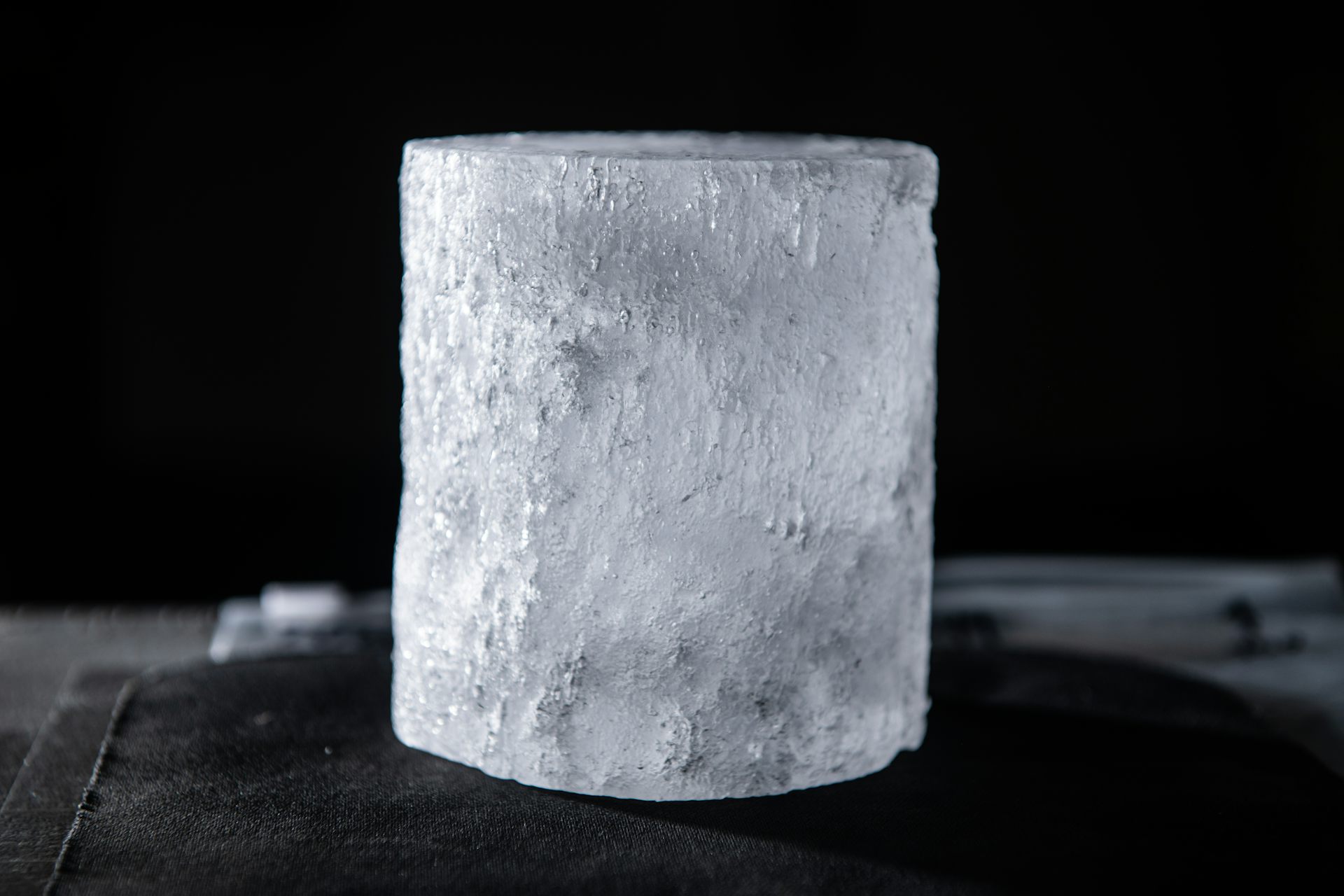
To find out, we analysed a 300kg section of Antarctic ice, dating from 40,000 to 80,000 years ago. The process is painstaking. The ice needs to be melted and chemically treated to isolate tiny amounts of iron, including the iron-60 from the stardust.
Para descobrir, analisamos uma seção de 300kg de gelo antártico, datada de 40.000 a 80.000 anos atrás. O processo é minucioso. O gelo precisa ser derretido e quimicamente tratado para isolar pequenas quantidades de ferro, incluindo o ferro-60 da poeira estelar.
Then, using the sensitive atom counting technique of accelerator mass spectrometry at the Heavy-Ion Accelerator Facility at Australian National University, we counted individual atoms of iron-60.
Em seguida, usando a sensível técnica de contagem de átomos da espectrometria de massa de acelerador no Centro de Acelerador de Hélio Pesado da Universidade Nacional Australiana, contamos átomos individuais de ferro-60.
The expectation was straightforward: based on previous measurements from surface snow of Antarctica and several thousand-year-old ocean sediments, we anticipated a certain steady level of iron-60 deposition.
A expectativa era simples: com base em medições anteriores da neve de superfície da Antártica e sedimentos oceânicos de vários milhares de anos, antecipávamos um certo nível constante de deposição de ferro-60.
Instead, we found less. Not zero, but noticeably lower than expected.
Em vez disso, encontramos menos. Não zero, mas visivelmente menor do que o esperado.
This result suggests that less interstellar dust was reaching Earth during that period. This is a remarkable change on a comparatively short astrophysical timescale and does not fit the long timescales of the iron-60 deposits that landed here millions of years ago. Instead, we needed to look for a smaller, more local source for the isotope.
Este resultado sugere que menos poeira interestelar estava atingindo a Terra durante esse período. Esta é uma mudança notável em uma escala astrofísica comparativamente curta e não se encaixa nos longos períodos dos depósitos de ferro-60 que caíram aqui milhões de anos atrás. Em vez disso, precisamos procurar uma fonte menor e mais local para o isótopo.
A fitting story
Uma história adequada
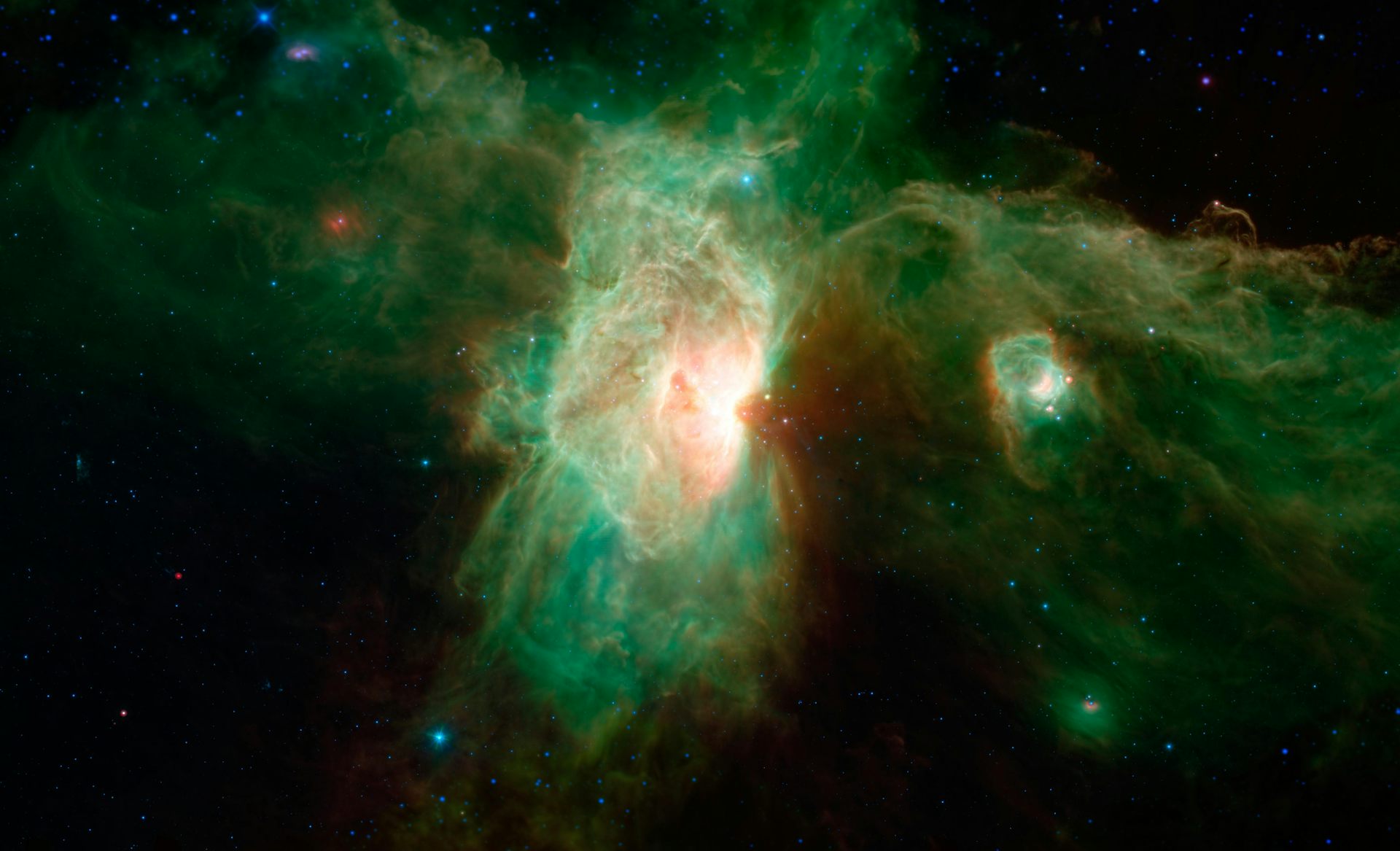
Naturally, astronomers are also quite interested in the clouds around the Solar System. Last year, a study reconstructing the history of the clouds arrived at the conclusion that they most likely originated in a stellar explosion. Furthermore, they found the Solar System has been traversing the Local Interstellar Cloud from sometime between 40,000 and 124,000 years ago.
Naturalmente, os astrônomos também são bastante interessados nas nuvens ao redor do Sistema Solar. No ano passado, um estudo que reconstruiu a história das nuvens chegou à conclusão de que elas provavelmente se originaram em uma explosão estelar. Além disso, eles descobriram que o Sistema Solar tem atravessado a Nuvem Interinterstelar Local desde algum momento entre 40.000 e 124.000 anos atrás.
If that’s correct, we would expect that the amount of iron-60 collected on Earth should have changed sometime in the same time period – between 40,000 and 124,000 years ago.
Se isso estiver correto, esperaríamos que a quantidade de ferro-60 coletada na Terra tivesse mudado em algum momento no mesmo período – entre 40.000 e 124.000 anos atrás.
This is exactly what our results showed in Antarctica.
É exatamente isso que nossos resultados mostraram na Antártida.
The story doesn’t fit perfectly, though. If these clouds did originate directly from an exploding star, we would expect way more iron-60 than we actually see in Antarctic ice.
A história não se encaixa perfeitamente, no entanto. Se essas nuvens se originaram diretamente de uma estrela em explosão, esperaríamos muito mais ferro-60 do que o que realmente vemos no gelo antártico.
Nevertheless, these clouds are imprinted in Earth’s geological record. If we look deeper and analyse even older ice, we might soon unravel the mystery of these local interstellar clouds, revealing their full history and uncertain origins.
Não obstante, essas nuvens estão impressas no registro geológico da Terra. Se olharmos mais fundo e analisarmos gelos ainda mais antigos, podemos logo desvendar o mistério dessas nuvens interinterstelares locais, revelando sua história completa e origens incertas.
Dominik Koll receives funding from the Australian Institute of Nuclear Science and Engineering (AINSE) .
Dominik Koll recebe financiamento do Instituto Australiano de Ciência e Engenharia Nuclear (AINSE) .
Read more
-

O que você precisa saber sobre o surto de Ebola que preocupa a OMS
What you need to know about the Ebola outbreak that has the WHO concerned
-

Você pode ser dono de uma voz? O mais recente movimento legal de Taylor Swift levanta grandes questões para IA e direitos autorais
Can you own a voice? Taylor Swift’s latest legal move raises big questions for AI and copyright