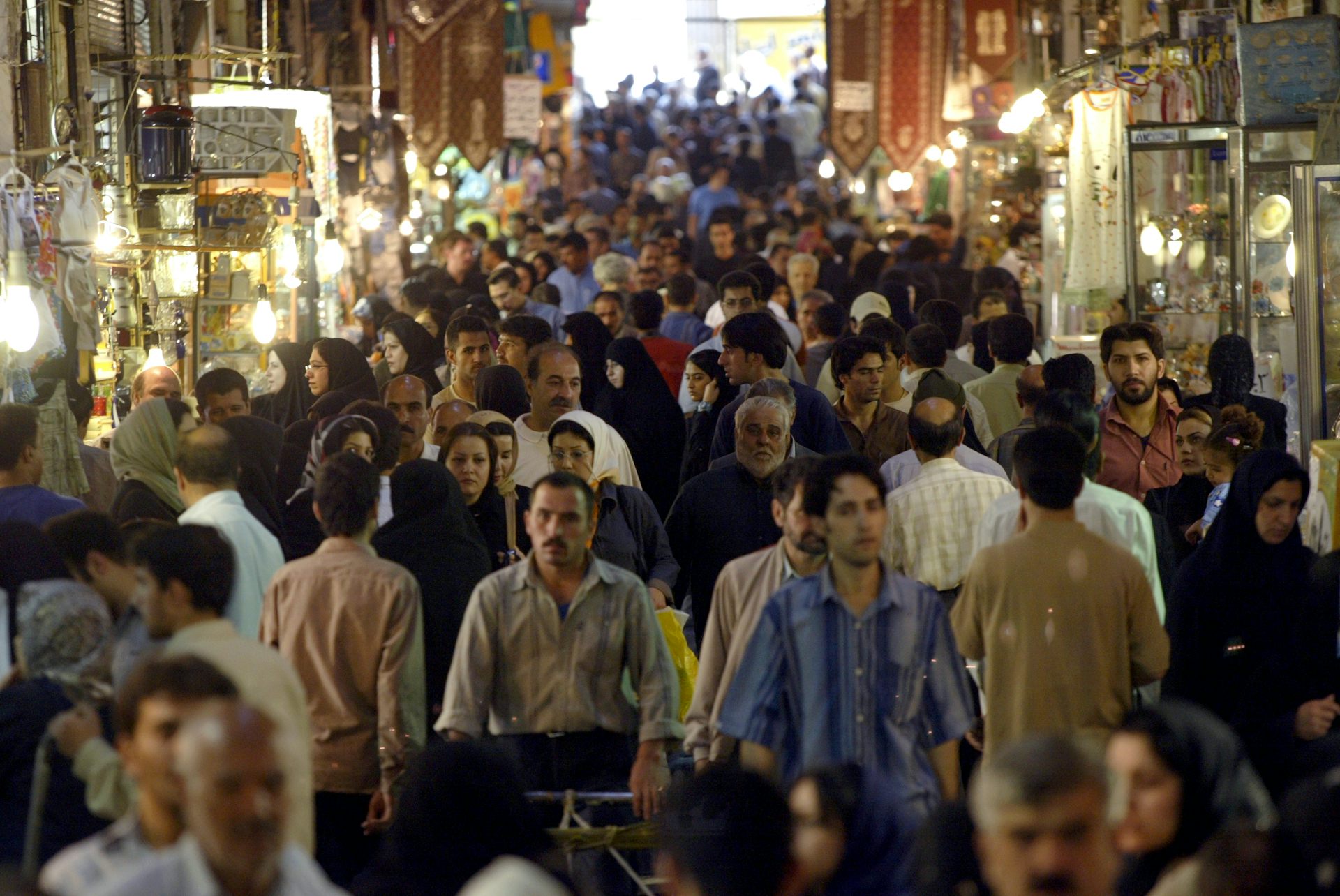
‘Sem medo de leões rugindo’: O Irã tem uma longa história de resistência contra agressores externos
‘No fear of roaring lions’: Iran has a long history of standing firm against outside aggressors
At every difficult moment in their long history, the Persian people have fought to preserve what is theirs. The Trump administration may have underestimated this.
Em cada momento difícil de sua longa história, o povo persa lutou para preservar o que é deles. A administração Trump pode ter subestimado isso.
US President Donald Trump’s threats against Iran since the war began have targeted not just the country’s military capabilities, but its entire civilisation.
As ameaças do presidente dos EUA, Donald Trump, contra o Irã desde o início da guerra visaram não apenas as capacidades militares do país, mas toda a sua civilização.
In recent days, he has threatened that Iran would be “blown off the face of the earth” if it attacks US ships trying to reopen the Strait of Hormuz.
Nos últimos dias, ele ameaçou que o Irã seria “varrido da face da Terra” se atacasse navios dos EUA que tentam reabrir o Estreito de Ormuz.
He’s previously pledged to send Iran back to the “Stone Age”, and warned that “a whole civilisation will die tonight, never to be brought back again”.
Ele já havia prometido enviar o Irã de volta à “Idade da Pedra” e alertou que “toda uma civilização morrerá esta noite, sem nunca mais ser restaurada”.
These statements show not only extreme belligerence, but Trump’s complete lack of understanding of Iran’s long, resilient culture and civilisation and the fortitude of its people.
Essas declarações mostram não apenas uma beligerância extrema, mas também a completa falta de compreensão de Trump sobre a longa e resiliente cultura e civilização do Irã e a fortaleza de seu povo.
Iran has been subjected to much internal strife and foreign power intervention, but it has never been colonised or subjugated. At every difficult moment in their history, Iranians have fought to preserve what is theirs.
O Irã foi submetido a muita turbulência interna e intervenção de potências estrangeiras, mas nunca foi colonizado ou subjugado. Em todos os momentos difíceis de sua história, os iranianos lutaram para preservar o que é deles.
Persian influence in ancient Greece and Rome
Influência Persa na Grécia e Roma Antigas
Since the Greco-Persian Wars (499 BCE) , Persia has served as the West’s ultimate “other”: a dark and despotic oriental villain menacing an enlightened West.
Desde as Guerras Greco-Persas (499 a.C.) , a Pérsia serviu como o “outro” definitivo do Ocidente: um vilão oriental sombrio e despótico que ameaça um Ocidente iluminado.
This is despite Persia’s return of exiled Jews in Babylon to Jerusalem to rebuild their temple in 538 BCE, and its tolerance of diversity in the world’s first truly multicultural empire.
Isso apesar do retorno pela Pérsia de judeus exilados da Babilônia a Jerusalém para reconstruir seu templo em 538 a.C., e de sua tolerância à diversidade no primeiro império verdadeiramente multicultural do mundo.
The victories of a coalition of Greek city-states over the Achaemenid Persian imperial forces at Salamis (480 BCE) and Marathon (490 BCE) are considered pivotal moments in the history of Western civilisation.
As vitórias de uma coalizão de cidades-estado gregas sobre as forças imperiais persas Aquemênidas em Salamina (480 a.C.) e Maratona (490 a.C.) são consideradas momentos cruciais na história da civilização ocidental.
Yet this was just a minor setback for Persia. In fact, Persia continued to play a decisive role in Greek affairs. Persian gold helped Sparta defeat Athens in the Peloponnesian War (431–404 BCE) , and Persia was often the most important mediator in Greek affairs.
No entanto, este foi apenas um revés menor para a Pérsia. De fato, a Pérsia continuou a desempenhar um papel decisivo nos assuntos gregos. O ouro persa ajudou Esparta a derrotar Atenas na Guerra do Peloponeso (431–404 a.C.) , e a Pérsia foi frequentemente o mediador mais importante nos assuntos gregos.
The Parthian and Sasanian Empires that followed the Achaemenids in Persia then challenged the Romans.
Os Impérios Parta e Sassânida, que sucederam os Aquemênidas na Pérsia, desafiaram então os romanos.
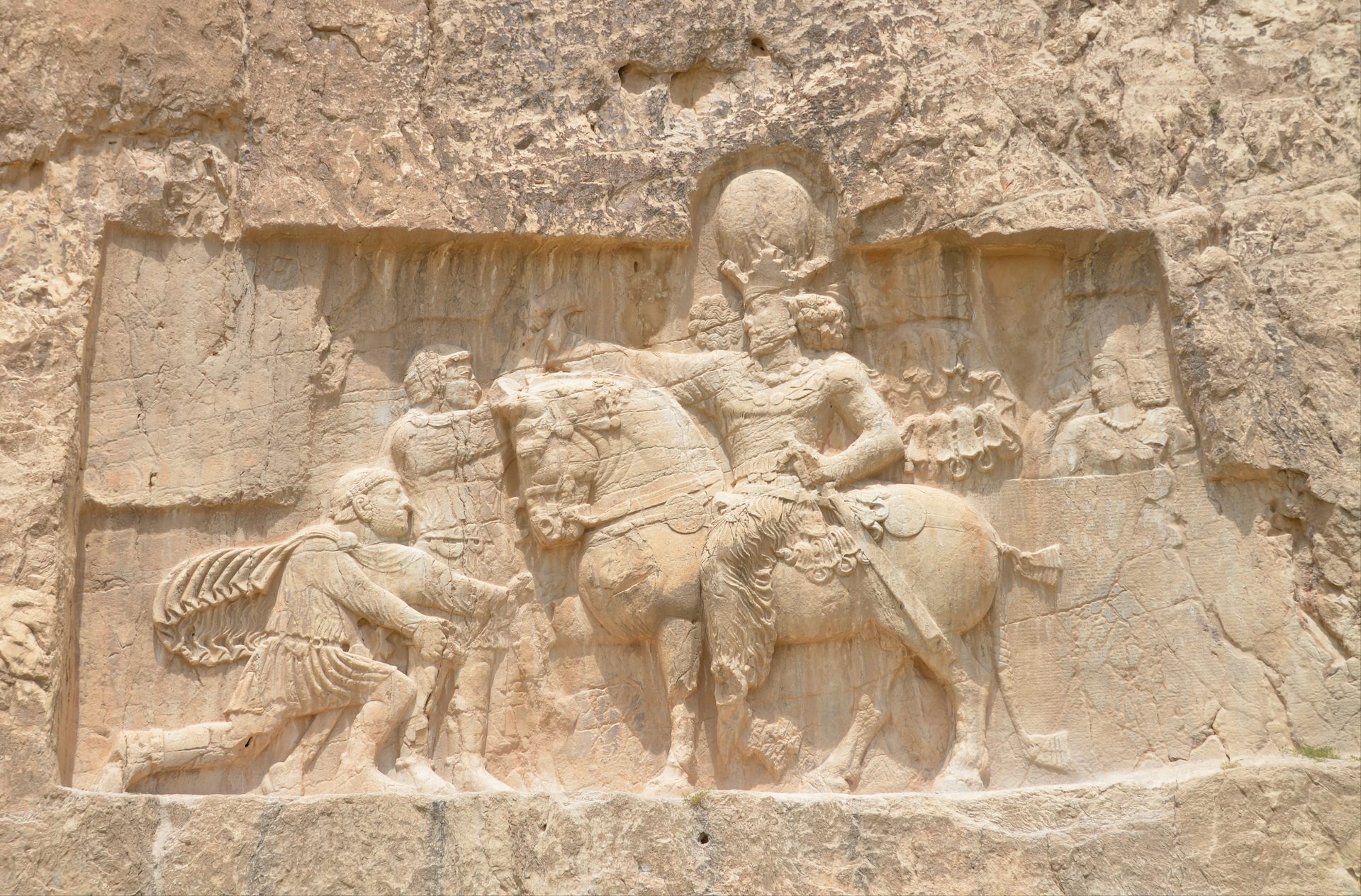
In 260 CE, Sasanian Emperor Shapur I captured Roman Emperor Valerian in battle – an unprecedented act. A century later, Shapur II’s army fought off an attempted invasion by Emperor Julian, killing him in the process.
Em 260 d.C., o imperador sassânida Shapur I capturou o imperador romano Valeriano em batalha – um ato sem precedentes. Um século depois, o exército de Shapur II repeliu uma invasão tentada pelo imperador Juliano, matando-o no processo.
Western triumphal narratives tend to forget that Persia repeatedly humbled the greatest Western empire in ancient times.
As narrativas triunfais ocidentais tendem a esquecer que a Pérsia humilhou repetidamente o maior império ocidental na antiguidade.
Surviving invasions from the east and west
Sobrevivendo a invasões do leste e do oeste
Alexander the Great conquered Persia militarily. However, he embraced Persian culture, which outlasted Greek influence in the region.
Alexandre, o Grande, conquistou a Pérsia militarmente. No entanto, ele abraçou a cultura persa, que superou a influência grega na região.
The advent of Islam did not extinguish Persia’s civilisation or resilience, either. Islamic leaders preserved Persian language and culture, kept pre-Islamic festivals such as Nowruz (the 3,000-year-old Persian New Year) , and adapted Zoroastrian concepts into Shiite Islam’s emphasis on resistance to tyranny.
O advento do Islã também não extinguiu a civilização ou a resiliência da Pérsia. Líderes muçulmanos preservaram a língua e a cultura persas, mantiveram festivais pré-islâmicos como Nowruz (o Ano Novo persa de 3.000 anos) , e adaptaram conceitos zoroastristas para a ênfase do Islã xiita na resistência à tirania.
The Mongols’ multiple invasions (between 1219 and 1258) devastated Iran, yet core elements of Persian civilisation survived. Persian power flourished again, especially under the Safavid dynasty (1501–1736) .
As múltiplas invasões dos mongóis (entre 1219 e 1258) devastaram o Irã, mas elementos centrais da civilização persa sobreviveram. O poder persa floresceu novamente, especialmente sob a dinastia Safávida (1501–1736) .
During the Qajar dynasty (1789–1925) , Persia was squeezed by the Anglo-Russian rivalry of Great Game era, but was not subdued.
Durante a dinastia Qajar (1789–1925) , a Pérsia foi pressionada pela rivalidade anglo-russa da era do Grande Jogo, mas não foi subjugada.
During the second world war, Iran was occupied by the British in the oil-rich south and the Soviets in the north. However, both powers pledged, along with the United States, to respect Iran’s sovereignty and withdraw at the end of the war.
Durante a Segunda Guerra Mundial, o Irã foi ocupado pelos britânicos no sul rico em petróleo e pelos soviéticos no norte. No entanto, ambas as potências prometeram, juntamente com os Estados Unidos, respeitar a soberania do Irã e se retirar no final da guerra.
A turbulent 20th century
Um século XX turbulento
This episode rejuvenated Iranian nationalism and prompted a movement to free Iran from traditional major power rivalries and gain control over its own resources. This especially pertained to oil, since the British had controlled Iran’s oil reserves through the Anglo-Iranian Oil Company (AIOC) from the early 19th century.
Este episódio rejuvenesceu o nacionalismo iraniano e impulsionou um movimento para libertar o Irã das rivalidades tradicionais das grandes potências e obter controle sobre seus próprios recursos. Isso se aplicava especialmente ao petróleo, já que os britânicos controlavam as reservas de petróleo do Irã através da Anglo-Iranian Oil Company (AIOC) desde o início do século XIX.
In 1951, a long-time nationalist-reformist, Mohammad Mossadegh, was elected prime minister and promptly nationalised the AIOC, sparking a major dispute with London.
Em 1951, Mohammad Mossadegh, um nacionalista-reformista de longa data, foi eleito primeiro-ministro e prontamente nacionalizou a AIOC, desencadeando uma grande disputa com Londres.
Mossadegh also sought to limit the power of Iran’s monarchy in favour of democratic reforms, causing a conflict with the young, pro-Western Mohammad Reza Shah, who was still the country’s reigning monarch.
Mossadegh também buscou limitar o poder da monarquia iraniana em favor de reformas democráticas, causando um conflito com o jovem e pró-Ocidente Mohammad Reza Shah, que ainda era o monarca reinante do país.
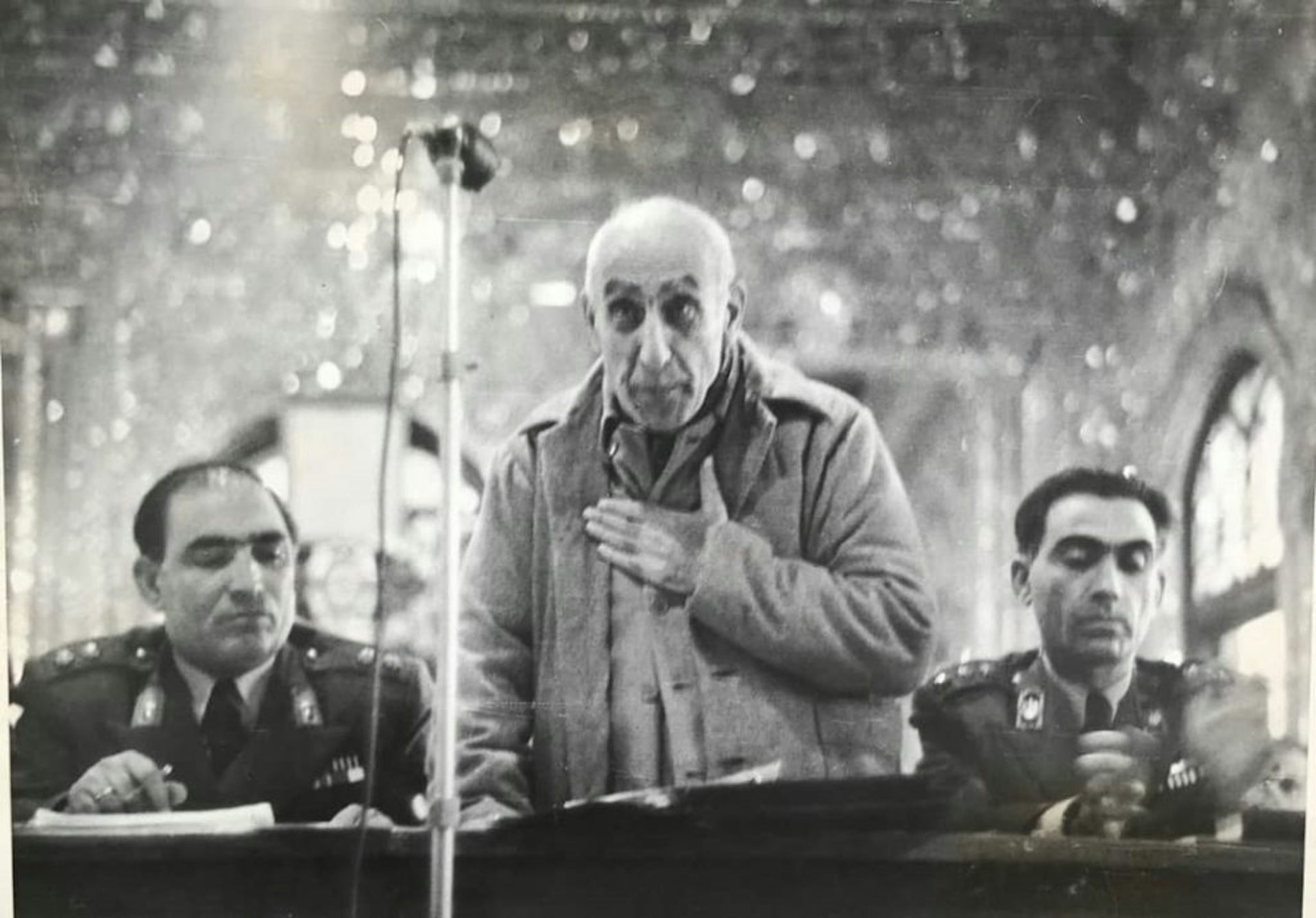
The shah was forced into exile in 1953, only to be returned to the throne days later when Mossadegh was overthrown in a covert operation by the US Central Intelligence Agency, with MI6’s help. (Fifty years later, US President Barack Obama acknowledged the CIA’s role in the coup.)
O xá foi forçado ao exílio em 1953, apenas para ser devolvido ao trono dias depois, quando Mossadegh foi deposto em uma operação secreta da Agência Central de Inteligência dos EUA (CIA) , com a ajuda do MI6. (Cinquenta anos depois, o presidente dos EUA, Barack Obama, reconheceu o papel da CIA no golpe.)
The US backed the shah as a pillar of American hegemony in the Middle East. In return, US oil companies received a 40% share of Iran’s oil industry.
Os EUA apoiaram o xá como um pilar da hegemonia americana no Oriente Médio. Em troca, as empresas de petróleo dos EUA receberam uma participação de 40% na indústria petrolífera do Irã.
Yet the shah was able to transform his dependent relationship with the US into one of interdependence. Iran became a pivotal player in the Organisation of Petroleum Exporting Countries (OPEC) , and in the region.
No entanto, o xá conseguiu transformar seu relacionamento dependente com os EUA em um de interdependência. O Irã tornou-se um ator fundamental na Organização dos Países Exportadores de Petróleo (OPEP) e na região.
In the wake of the 1973–74 energy crisis, then-US Secretary of State Henry Kissinger warned the United States would react with force if it was “strangled” by a cut in oil deliveries – a veiled message to the shah.
Após a crise energética de 1973–74, o então Secretário de Estado dos EUA, Henry Kissinger, alertou que os Estados Unidos reagiriam com força se fossem “estrangulados” por um corte nas entregas de petróleo – uma mensagem velada ao xá.
The Iranian revolution of 1978–79 then toppled the shah and enabled his chief religious and political opponent, Ayatollah Ruhollah Khomeini, to assume power. Khomeini declared Iran an Islamic Republic with an anti-US and anti-Israel posture.
A Revolução Iraniana de 1978–79 depôs então o xá e permitiu que seu principal oponente religioso e político, Ayatollah Ruhollah Khomeini, assumisse o poder. Khomeini declarou o Irã uma República Islâmica com uma postura anti-EUA e anti-Israel.
He essentially based his rule in the historic pride Iranians held as a people in charge of their destiny.
Ele essencialmente baseou seu governo no orgulho histórico que os iranianos sentiam como povo no controle do seu destino.
Khomeini and his successor, Ayatollah Ali Khamenei sought to entrench Shia political Islamism as the ideological guide and legitimate foundation of the state. But they sought to blend this with the Iranians’ sense of civilisational, cultural and nationalist identity, especially in the face of outside aggression.
Khomeini e seu sucessor, Ayatollah Ali Khamenei, buscaram enraizar o islamismo político xiita como guia ideológico e fundamento legítimo do estado. Mas eles buscaram misturar isso com o senso de identidade civilizacional, cultural e nacionalista dos iranianos, especialmente diante da agressão externa.
‘Iran is my land’
‘O Irã é minha terra’
The celebrated Persian-speaking poet Abul-Qasim Ferdowsi (940–1020 CE) once said:
O celebrado poeta falante de persa, Abul-Qasim Ferdowsi (940–1020 EC) , disse certa vez:
Iran is my land, and the whole world is under my feet. The people of this land are the possessors of virtue, art and bravery. They have no fear of roaring lions.
O Irã é minha terra, e o mundo inteiro está sob meus pés. O povo desta terra é portador de virtude, arte e bravura. Eles não têm medo de leões rugindo.
As Iran’s standoff with the US continues, it appears the regime is prepared for the long haul against yet another military foe.
À medida que o impasse do Irã com os EUA continua, parece que o regime está preparado para um longo confronto contra mais um inimigo militar.
But there is no military solution to the conflict. Diplomacy within the framework of mutual respect and trust is the best way forward. Otherwise, the region and the world may remain captive to an energy and economic crisis that could have been resolved through negotiations, rather than war.
Mas não há solução militar para o conflito. A diplomacia dentro do quadro de respeito e confiança mútuos é o melhor caminho a seguir. Caso contrário, a região e o mundo podem permanecer cativos de uma crise energética e econômica que poderia ter sido resolvida por meio de negociações, em vez de guerra.
As for the future of the Islamic government, that needs to be determined by the Iranian people.
Quanto ao futuro do governo islâmico, isso precisa ser determinado pelo povo iraniano.
The authors do not work for, consult, own shares in or receive funding from any company or organisation that would benefit from this article, and have disclosed no relevant affiliations beyond their academic appointment.
Os autores não trabalham, consultam, possuem ações ou recebem financiamento de nenhuma empresa ou organização que se beneficiaria deste artigo, e não divulgaram afiliações relevantes além de seus cargos acadêmicos.
Read more
-
Amor, jornada, aventura: a narrativa por trás dos discursos de Xi Jinping e da grande estratégia da China
Love, quest, adventure: the storytelling behind Xi Jinping’s speeches and China’s grand strategy
-
Os temas de paz e dignidade humana têm sido centrais para o Papa Leo ao marcar seu primeiro ano no cargo
Themes of peace and human dignity have been central to Pope Leo as he marks his first year in office