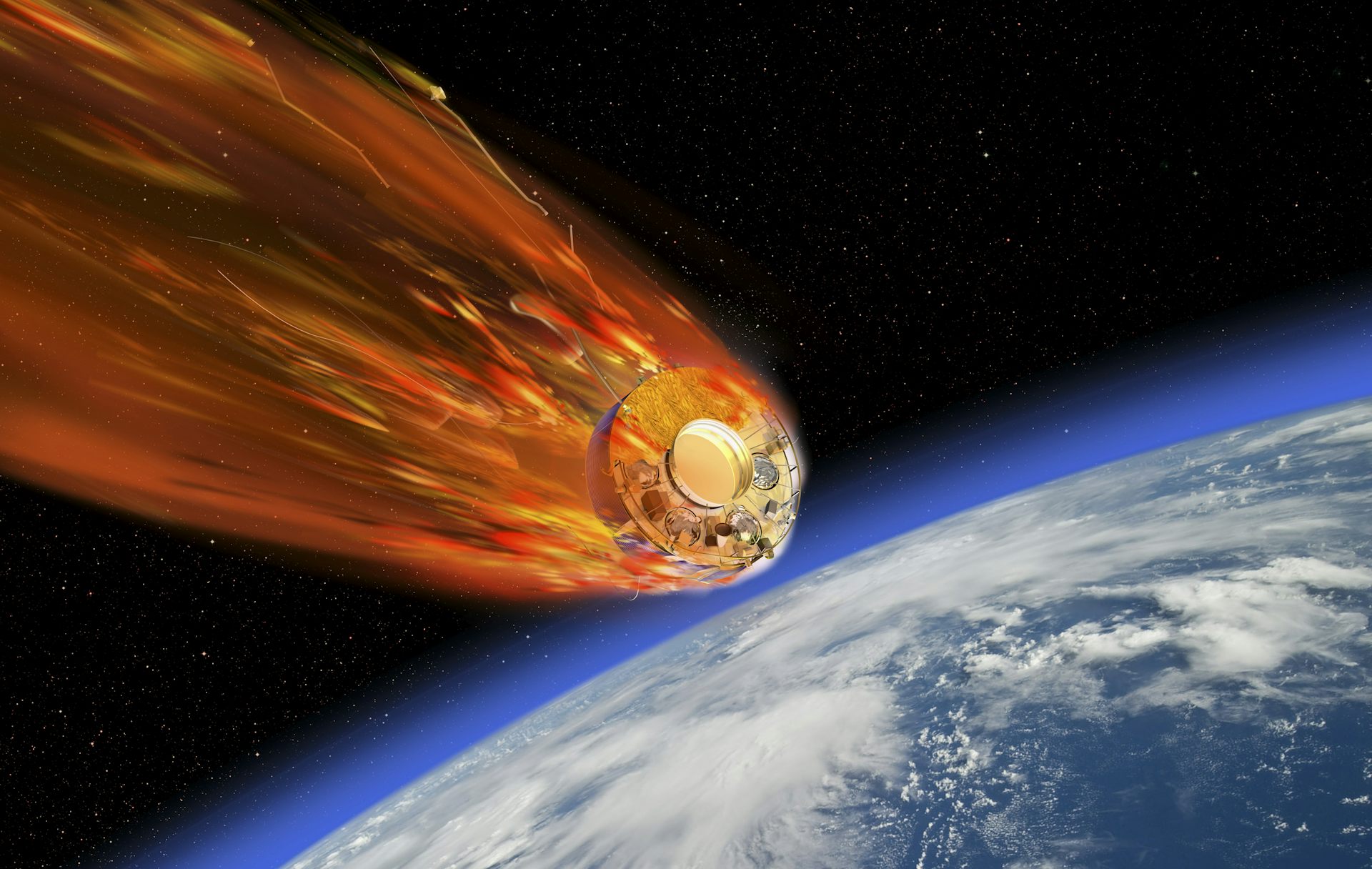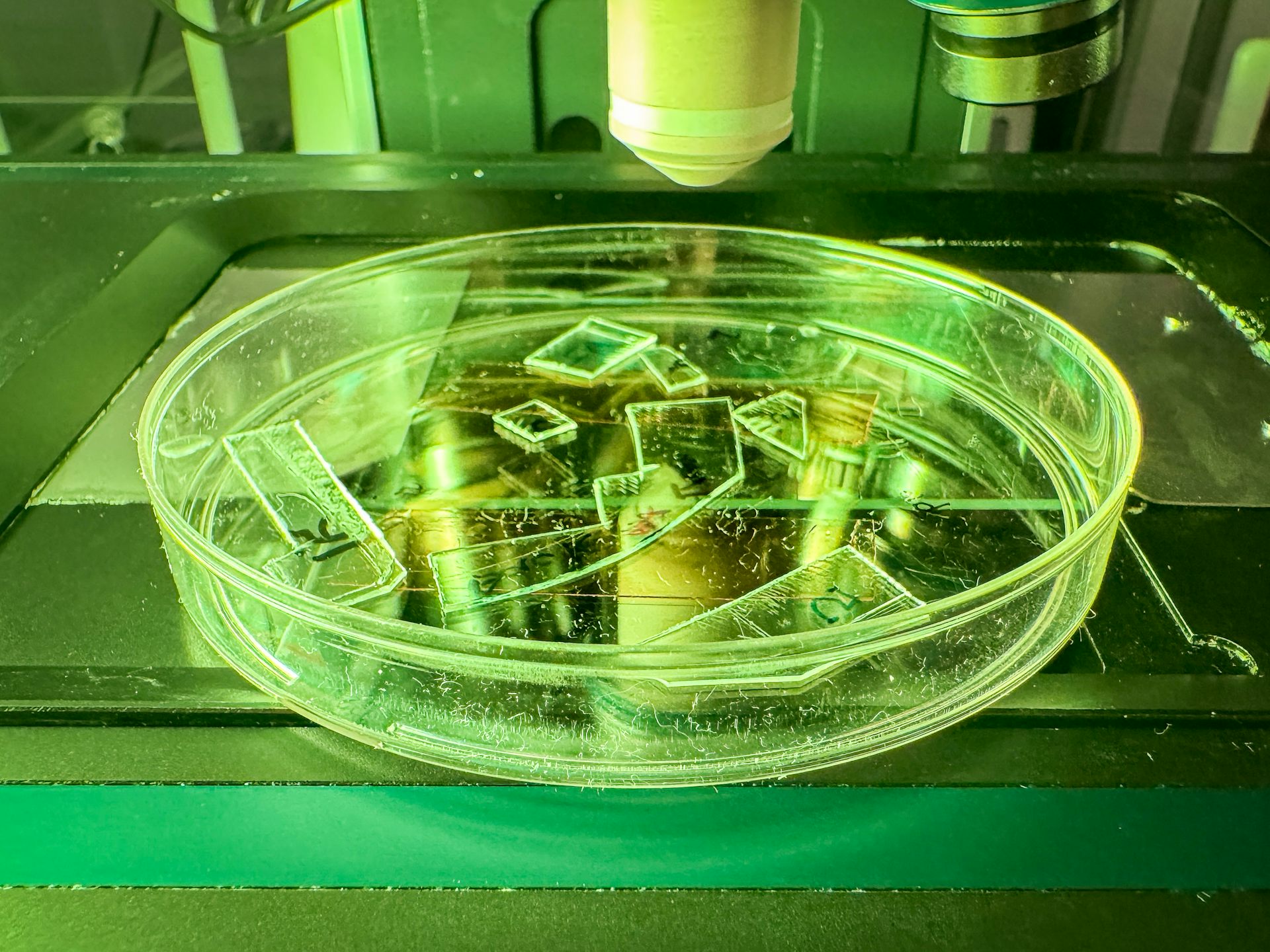
覆盖着数千个微小柱体的新型塑料薄膜,在接触时可以撕裂病毒。
New plastic film covered in thousands of tiny pillars c…
The textured acrylic plastic surface, inspired by insect wings, could help prevent the spread of major viruses.
这种灵感来源于昆虫翅膀的纹理亚克力塑料表面,有助于阻止主要病毒的传播。
Think of how many surfaces you touch every day, from your kitchen bench to the hand rail on the bus or train, your work desk and your phone screen.
每天,您接触的表面非常多,从厨房台面到公交车或火车上的扶手,从您的办公桌到手机屏幕。
A range of nasty viruses and other germs can easily spread via these surfaces. The typical route of infection involves touching a contaminated surface – and then touching your eyes, nose or mouth.
各种有害病毒和其他病菌很容易通过这些表面传播。典型的感染途径是触摸了受污染的表面——然后触摸了眼睛、鼻子或嘴巴。
Of course, it’s possible to clean surfaces with chemical products. But these can wear off, harm the environment or contribute to antimicrobial resistance, where germs no longer respond to medicines because of repeated exposure.
当然,用化学产品清洁表面是可行的。但这些产品可能会磨损、危害环境,或导致抗菌耐药性,即病菌由于反复接触而不再对药物产生反应。
In our new study, published in Advanced Science, colleagues and I created a thin plastic surface with tiny nanoscale features, billionths of a metre in size, that mimic the nanotextured surface of insect wings and can physically rupture viruses – specifically human parainfluenza virus type 3 (hPIV-3) .
在我们发表于《Advanced Science》的新研究中,我和同事们创造了一种具有微小纳米级特征的薄塑料表面,其尺寸达到十亿分之一米,模仿了昆虫翅膀的纳米纹理表面,并能够物理性地破坏病毒——特别是人副流感病毒3型(hPIV-3)。
This new material offers a cheap, scalable way to make surfaces such as phones and hospital equipment far less likely to spread disease.
这种新型材料提供了一种廉价、可扩展的方法,可以使手机和医院设备等表面大大降低传播疾病的可能性。
The downsides of disinfectants
消毒剂的缺点
Current methods for combating the spread of viruses via surfaces usually involves cleaning to remove dirt and disinfection to remove hidden contaminants.
目前通过表面传播病毒的对抗方法通常包括清洁以去除污垢和消毒以去除隐藏的污染物。
Disinfectant must remain wet for some time to kill germs. This can be challenging in some real-world settings.
消毒剂必须保持湿润一段时间才能杀死细菌。这在一些现实环境中可能具有挑战性。
Surfaces can also be recontaminated quickly when other people touch them. And disinfection often involves the use of harsh chemicals which can damage equipment and the environment.
当其他人触摸表面时,表面也可能迅速被重新污染。而且消毒通常涉及使用刺激性化学品,这些化学品可能会损坏设备和环境。
Scientists have previously developed antiviral surface modifications. These strategies often involve incorporating materials such as graphene or tannic acid and other natural agents into personal protective equipment such as masks, gloves, goggles, hard hats, and respirators.
科学家们此前已经开发了抗病毒表面改性。这些策略通常涉及将石墨烯、单宁酸和其他天然制剂等材料纳入个人防护设备,例如口罩、手套、护目镜、安全帽和呼吸器。
These coatings are efficient. But they can pose a risk to human health. They can also be environmental hazards due to chemical leaching and have declining effectiveness over time as the potency of the active ingredients weakens.
这些涂层是高效的。但它们可能对人类健康构成风险。由于化学物质浸出,它们也可能成为环境危害,并且随着活性成分效力的减弱,其有效性会随时间下降。
A decade-long journey
十年磨砺的征程
Our journey toward a virus-bursting surface started more than a decade ago.
我们迈向破病毒表面的征程始于十多年前。
We initially aimed to engineer a surface so smooth that germs would simply slide off. Surprisingly, we discovered the opposite. Bacteria adhere quite readily to nanoscopically smooth surfaces.
最初,我们的目标是设计出一种极其光滑的表面,让细菌能够轻易滑落。令人惊讶的是,我们发现了相反的情况。细菌非常容易附着在纳米级光滑的表面上。
Nature offers examples of bacteria-free surfaces. Take the water-repelling wings of cicadas and dragonflies. While these wings are self-cleaning, they act less by repelling bacteria and more as natural bactericides. That is, they kill bacteria. Natural bactericides are nature-derived “agents” that can kill germs, rather than inhibit their growth.
大自然提供了无菌表面的例子。例如蝉和蜻蜓具有防水的翅膀。虽然这些翅膀具有自清洁性,但它们的作用与其说是排斥细菌,不如说是天然杀菌剂。也就是说,它们能杀死细菌。天然杀菌剂是源自大自然的“物质”,它们能杀死病菌,而不是抑制其生长。
Experiments my colleagues and I did with gold-coated wings confirmed this bacteria-killing effect is not driven by surface chemistry, but rather by topography.
我和我的同事们用镀金的翅膀进行的实验证实,这种杀菌效果并非由表面化学性质驱动,而是由表面形貌驱动的。
The physical nanostructures on the surface essentially force bacterial cell membranes to stretch and rupture.
表面上的物理纳米结构本质上迫使细菌细胞膜拉伸并破裂。
Our earlier work showed that nanospike-covered silicon effectively destroys viruses on contact. But its rigid nature restricts its use on complex objects.
我们早期的工作表明,覆盖有纳米尖刺的硅片在接触时能有效破坏病毒。但其刚性限制了它在复杂物体上的应用。
A lightweight, flexible and virus-bursting material
一种轻质、柔性且能爆破病毒的材料
In this new study, we addressed this problem by creating a virus-bursting material that was lightweight, cost-effective and flexible.
在这项新的研究中,我们通过创造出轻质、具有成本效益且柔性的爆破病毒材料来解决这个问题。
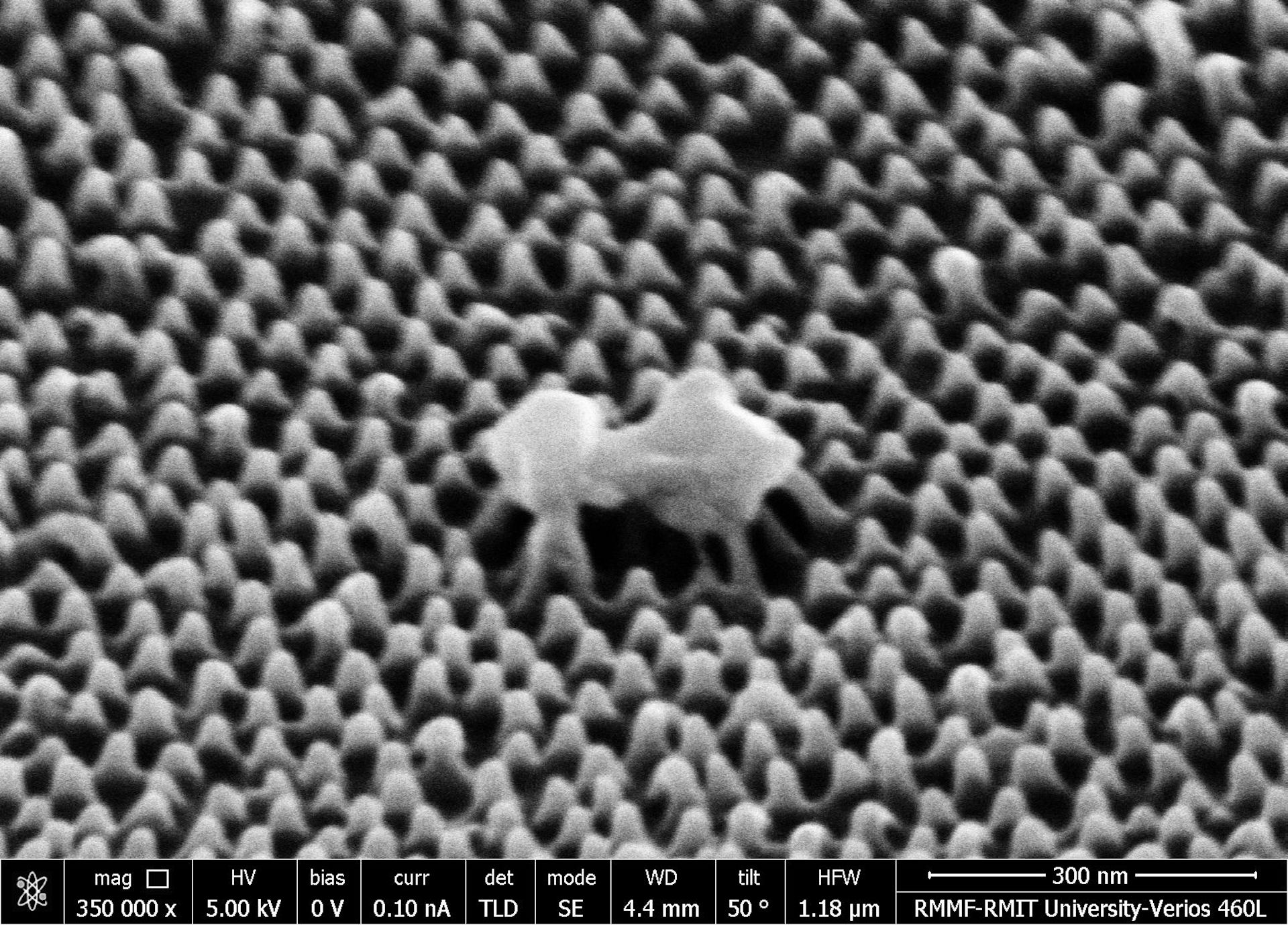
This material is a thin acrylic film covered in thousands and thousands of ultra fine pillars. The nanotextured materials are smooth to touch. However, these nanopillars grab and stretch a virus’s outer shell until it ruptures. This kills viruses through mechanical force.
这种材料是一种覆盖着数以万计超细柱体的薄丙烯酸酯薄膜。这种纳米纹理材料摸起来很光滑。然而,这些纳米柱体能够抓住并拉伸病毒的外壳,直到其破裂。这通过机械力杀死病毒。
Lab tests with hPIV 3, which causes bronchiolitis and pneumonia, found up to 94% of virus particles were ripped apart or fatally damaged within an hour of contact with this material.
在使用hPIV 3(一种引起支气管炎和肺炎的病毒)进行的实验室测试中,发现接触这种材料一小时内,高达94%的病毒颗粒被撕裂或严重破坏。
We discovered the distance between nanopillars matters far more than their height, with tightly packed pillars about 60 nanometres apart working best.
我们发现纳米柱体之间的距离比它们的高度更重要,间距约为60纳米的紧密排列的柱体效果最佳。
The mould we used to create this material can be easily scaled to provide wide-ranging industrial opportunities, from food packaging to public transport systems to hospital equipment and office desks.
我们用于制造这种材料的模具可以轻松扩大规模,为广泛的工业领域提供机会,从食品包装到公共交通系统,再到医院设备和办公桌。
Nanostructured surfaces are built for durability. But they are susceptible to the same physical, chemical, and environmental stressors as any other material, and will degrade over time.
纳米结构表面是为耐用性设计的。但它们容易受到与任何其他材料相同的物理、化学和环境应力,并会随着时间推移而降解。
Much remains to be discovered in the search for germ-free surfaces. But these nanotextured surfaces have enormous potential in the fight against viruses and provide an alternative to traditional, chemical-based methods.
在寻找无菌表面方面,仍有许多未知之处。但这些纳米纹理表面在抗击病毒方面具有巨大的潜力,并为传统的化学方法提供了一种替代方案。
Elena Ivanova does not work for, consult, own shares in or receive funding from any company or organisation that would benefit from this article, and has disclosed no relevant affiliations beyond their academic appointment.
Elena Ivanova不为任何受益于本文的公司或组织工作、提供咨询、拥有股份或接受资金,并且除了其学术任命之外,未披露任何相关隶属关系。