‘Primer contacto’ que pudo haber llevado a la vida compleja en la Tierra finalmente presenciado por científicos
‘First contact’ that may have led to complex life on Earth finally witnessed by scientists
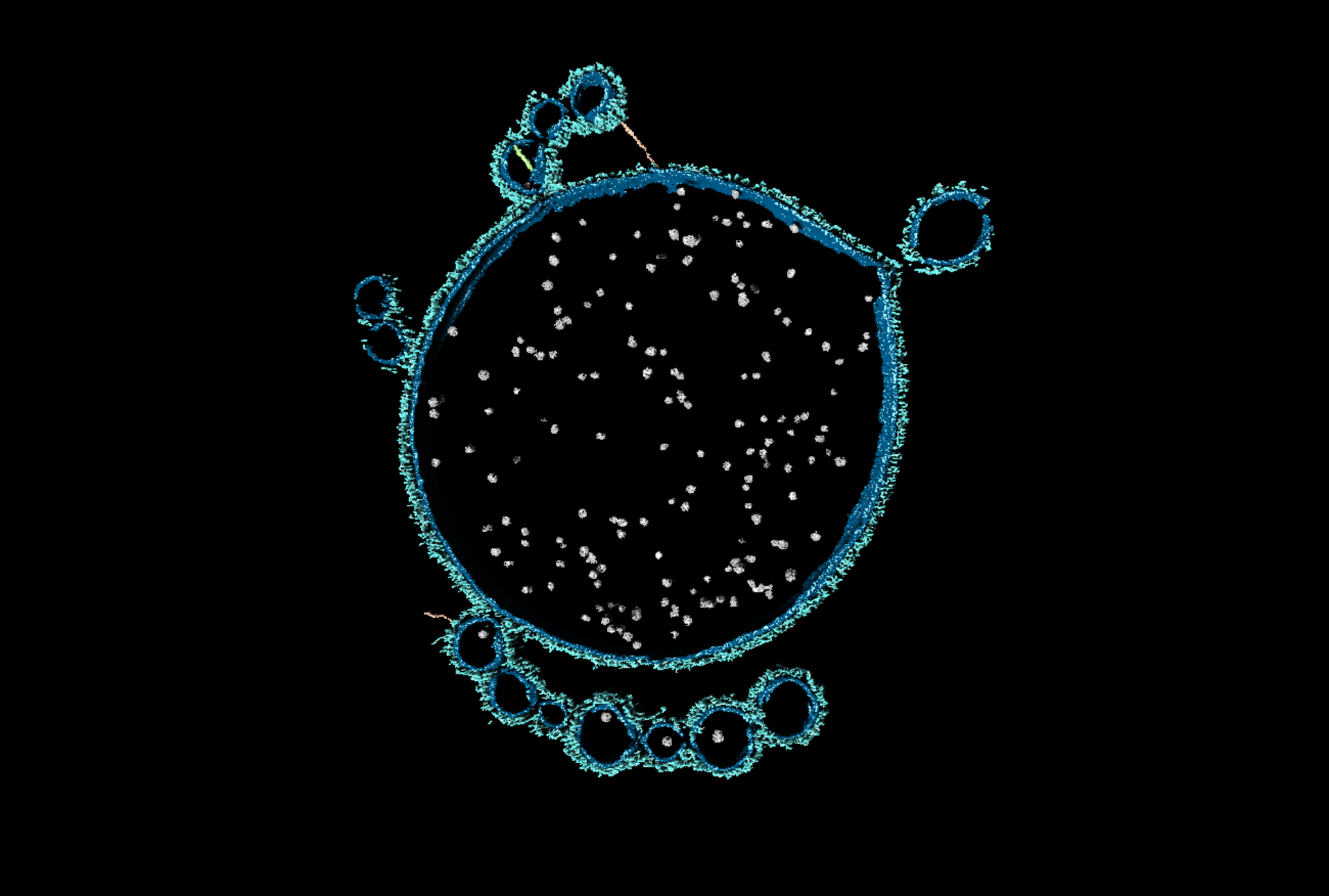
Stromatolites might look like rocks. But they are living relics of ancient systems that thrived on Earth billions of years ago.
Los estromatolitos pueden parecer rocas. Pero son reliquias vivas de sistemas antiguos que prosperaron en la Tierra hace miles de millones de años.
On the shores of the west coast of Australia lies a window to our past: the stromatolites and microbial mats of Gathaagudu (Shark Bay) .
En las costas de la costa oeste de Australia yace una ventana a nuestro pasado: los estromatolitos y los tapetes microbianos de Gathaagudu (Shark Bay) .
To the untrained eye they look like a collection of rocks and slime – but they are in fact teeming with microbial life. And these stromatolites are living “relics” of ancient ecosystems that thrived on Earth billions of years ago.
Para el ojo inexperto parecen una colección de rocas y limo, pero de hecho están repletos de vida microbiana. Y estos estromatolitos son «reliquias» vivas de ecosistemas antiguos que prosperaron en la Tierra hace miles de millones de años.
If you wade past, it feels like you’re walking back through time. In fact, the first bubbles of oxygen that filled the atmosphere on early Earth likely came from ancient stromatolites. You could say we owe our very existence to these piles of rocks.
Si caminas por allí, se siente como si estuvieras retrocediendo en el tiempo. De hecho, las primeras burbujas de oxígeno que llenaron la atmósfera de la Tierra primitiva probablemente provinieron de estromatolitos antiguos. Se podría decir que debemos nuestra propia existencia a estos montones de rocas.
So, what other secrets of our past could these ecosystems tell us? Through decades of research, we know how early life has woven its path through these “living rocks”. But most recently our team embarked on the greatest genealogy search of them all: searching for our great microbial ancestors, the Asgard archaea.
Entonces, ¿qué otros secretos de nuestro pasado podrían contarnos estos ecosistemas? A lo largo de décadas de investigación, sabemos cómo la vida temprana ha tejido su camino a través de estas «rocas vivas.» Pero más recientemente, nuestro equipo se embarcó en la búsqueda genealógica más grande de todas: la búsqueda de nuestros grandes ancestros microbianos, las arqueas Asgard.
And in a new paper, published today in the journal Current Biology, we report how this search led to the discovery of a key clue that could help explain how complex life evolved on Earth.
Y en un nuevo artículo, publicado hoy en la revista Current Biology, informamos cómo esta búsqueda llevó al descubrimiento de una pista clave que podría ayudar a explicar cómo evolucionó la vida compleja en la Tierra.
The cells that comprise complex life
Las células que componen la vida compleja
Asgard archaea were originally named after Norse gods. This fascinating group of microbes sits on the cusp of one of the most significant events in the evolution of life: the origin of the complex cells that make up plants and animals, known as eukaryotes.
Los arqueas Asgard fueron nombrados originalmente en honor a los dioses nórdicos. Este fascinante grupo de microbios se encuentra en la cúspide de uno de los eventos más significativos en la evolución de la vida: el origen de las células complejas que componen plantas y animales, conocidas como eucariotas.
Evidence suggests Asgard archaea are the closest relatives of eukaryotes. And that on an early Earth it was the “marriage” of an ancient Asgard archaeon and a bacterium that led to the first eukaryotes.
La evidencia sugiere que los arqueas Asgard son los parientes más cercanos de los eucariotas. Y que en una Tierra primitiva fue el «matrimonio» de un antiguo arqueano Asgard y una bacteria lo que condujo a los primeros eucariotas.
They formed an ancient partnership. They shared resources and physically interacted, leading to the first complex cells. Like a Romeo and Juliet tale of two distant families coming together, Asgard archaea and bacteria decided it was time to break from traditional family values.
Formaron una antigua asociación. Compartieron recursos e interactuaron físicamente, lo que llevó a las primeras células complejas. Como un cuento de Romeo y Julieta de dos familias distantes que se unen, los arqueas Asgard y las bacterias decidieron que era hora de romper con los valores familiares tradicionales.
But we have never seen a model of how this may have occurred. Until now.
Pero nunca antes habíamos visto un modelo de cómo pudo haber ocurrido esto. Hasta ahora.
Holding up a mirror to the ancient past
Sosteniendo un espejo del pasado antiguo
Our team used the mats of Shark Bay as a “seed” to establish cultures of these ancient microbes. We are one of only four groups worldwide to achieve this, through years of research with a dedicated team of graduate students nurturing the Asgards like offspring.
Nuestro equipo utilizó los tapetes de Shark Bay como una «semilla» para establecer cultivos de estos microbios antiguos. Somos uno de los únicos cuatro grupos en el mundo en lograr esto, gracias a años de investigación con un equipo dedicado de estudiantes de posgrado que nutrieron a los Asgard como si fueran descendencia.
But the Asgards were not alone. We found them together with a sulphate-loving bacterium. Could this be a model of how complex life may have started on a primitive Earth?
Pero los Asgard no estaban solos. Los encontramos junto con una bacteria amante del sulfato. ¿Podría ser este un modelo de cómo pudo haber comenzado la vida compleja en una Tierra primitiva?
We began by sequencing the Asgards’ DNA to decipher exactly how these microbes tick at the genetic level. We also used artificial intelligence to model how proteins could have behaved in a world before eukaryotes. Evidence suggested these two microbes were sharing nutrients. In other words, they were cooperating.
Comenzamos secuenciando el ADN de los Asgard para descifrar exactamente cómo funcionan estos microbios a nivel genético. También utilizamos inteligencia artificial para modelar cómo podrían haber funcionado las proteínas en un mundo anterior a los eucariotas. La evidencia sugirió que estos dos microbios estaban compartiendo nutrientes. En otras palabras, estaban cooperando.
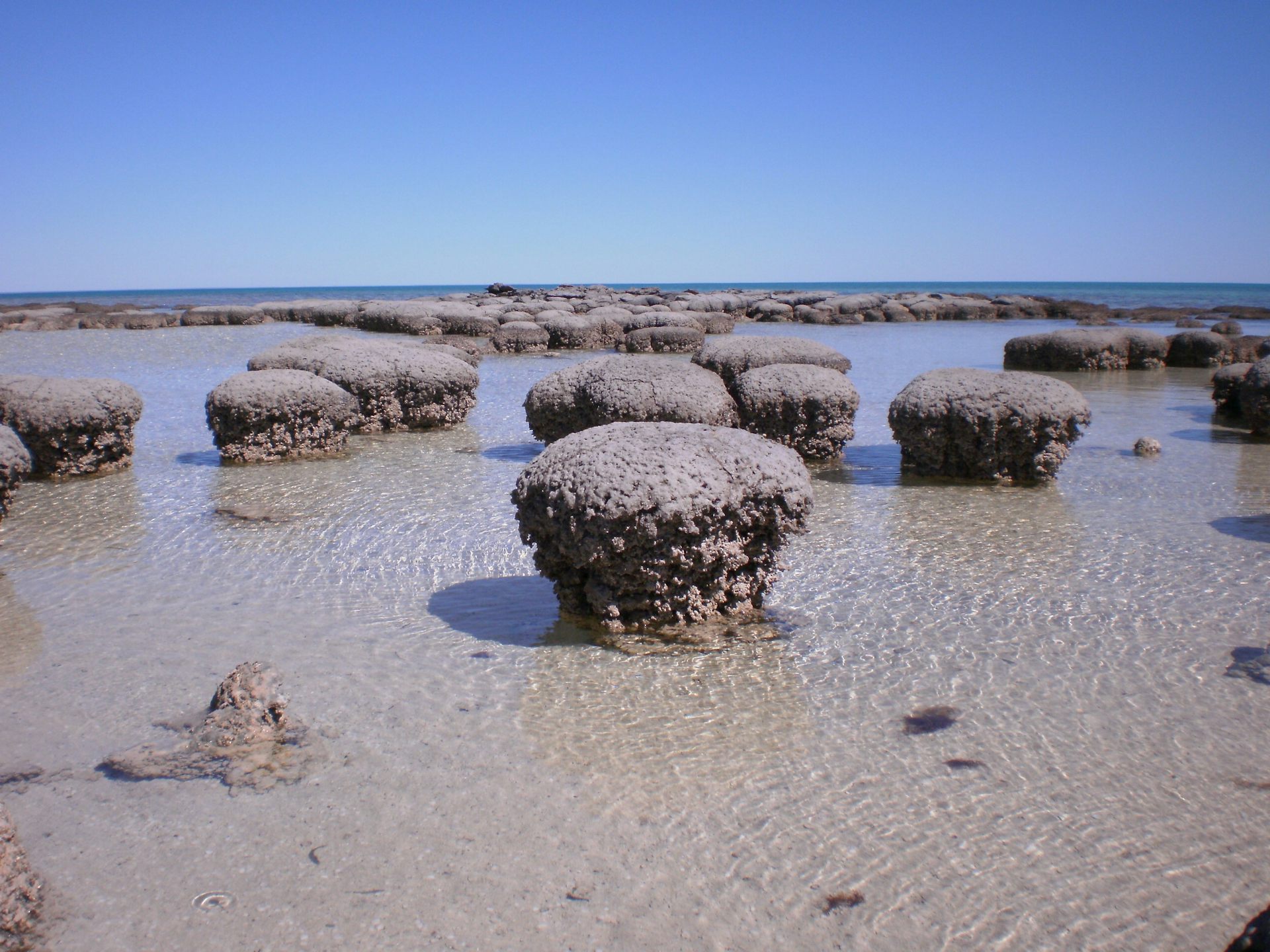
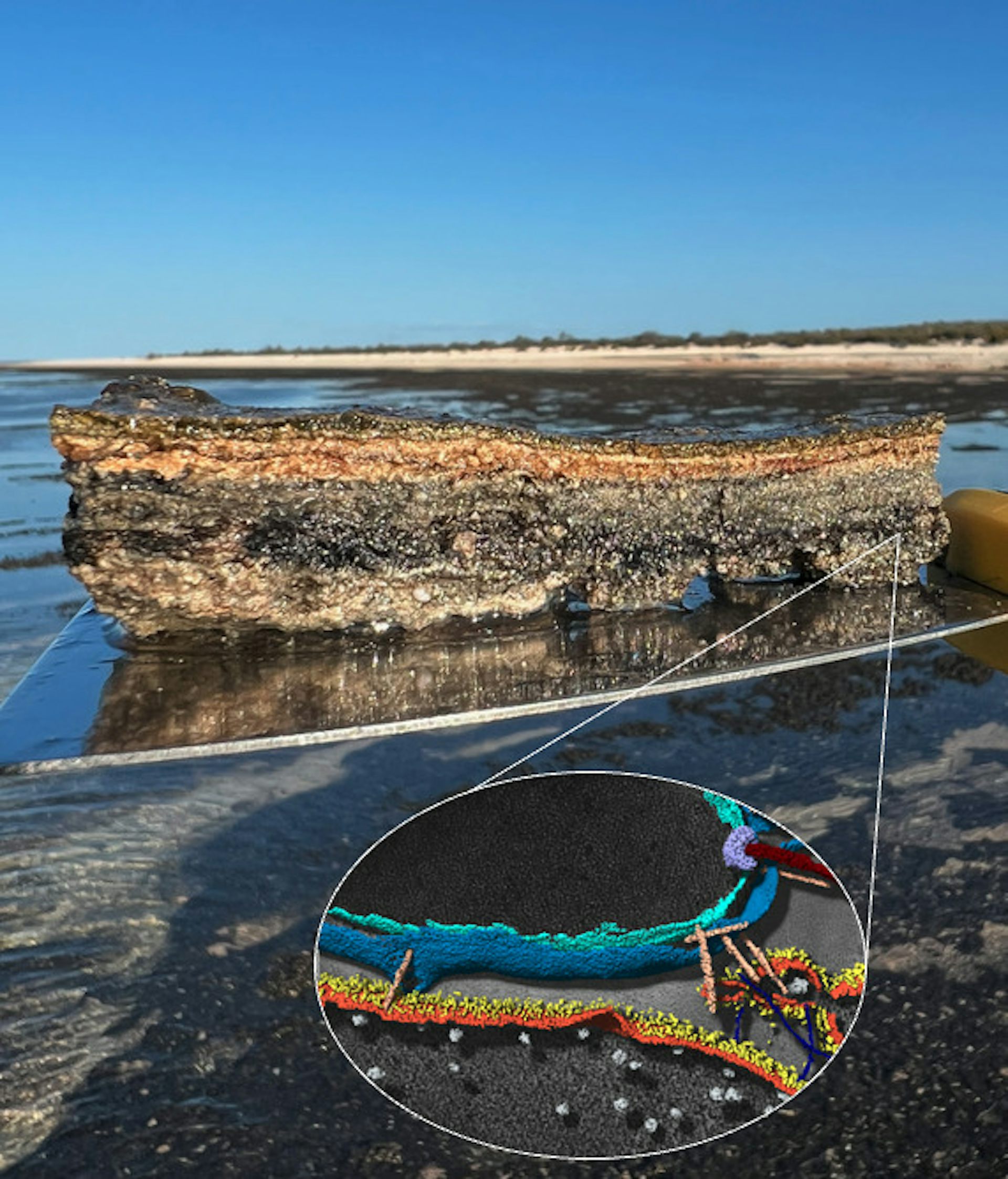
But we wanted to delve deeper. What do our great microbial ancestors look like? Here we turned to electron cryotomography, a high-resolution imaging approach that allowed us to observe cells and structures at a nanometre scale.
Pero queríamos profundizar más. ¿Cómo eran nuestros grandes ancestros microbianos? Aquí recurrimos a la criotomografía electrónica, un enfoque de imagen de alta resolución que nos permitió observar células y estructuras a escala nanométrica.
And here we showed – for the first time – an Asgard archaeon and a bacterium directly interacting. Tiny nanotubes were connecting the two organisms – perhaps reflecting what their great-ancestors did on an early Earth that ultimately led to the explosion of complex life as we know it.
Y aquí mostramos, por primera vez, un arqueano Asgard y una bacteria interactuando directamente. Pequeños nanotubos estaban conectando a los dos organismos, quizás reflejando lo que hicieron sus grandes ancestros en una Tierra temprana que finalmente condujo a la explosión de la vida compleja tal como la conocemos.
Weaving western science with Indigenous knowledge
Tejiendo la ciencia occidental con el conocimiento indígena
This was a major discovery – one that originated in Gathaagudu, a World Heritage Site with significant environmental and cultural values.
Este fue un gran descubrimiento, uno que se originó en Gathaagudu, un sitio Patrimonio de la Humanidad con importantes valores ambientales y culturales.
Aboriginal people first inhabited Gathaagudu over 30,000 years ago. We wanted to recognise and celebrate the language of the Malgana people, one of the traditional language groups of Gathaagudu. We also wanted to connect western science with Indigenous Knowledge in a meaningful way.
Los aborígenes habitaron Gathaagudu hace más de 30.000 años. Queríamos reconocer y celebrar el idioma del pueblo Malgana, uno de los grupos lingüísticos tradicionales de Gathaagudu. También queríamos conectar la ciencia occidental con el Conocimiento Indígena de una manera significativa.
To this end and working closely with the world’s foremost Malgana language expert, Kymberley Oakley, and Aboriginal elders, a name was granted for our novel Asgard archaeon from the language of the Malgana people: Nerearchaeum marumarumayae. The species name – marumarumayae – is derived from the Aboriginal language of the Malgana people, meaning “ancient home”, a reference to stromatolites being of ancient origin in Earth’s history.
Con este fin y trabajando estrechamente con la principal experta en lengua Malgana del mundo, Kymberley Oakley, y ancianos aborígenes, se otorgó un nombre a nuestro novedoso arqueón Asgard del idioma del pueblo Malgana: Nerearchaeum marumarumayae. El nombre de la especie – marumarumayae – se deriva del idioma aborigen del pueblo Malgana, lo que significa “hogar antiguo”, una referencia a que los estromatolitos tienen un origen antiguo en la historia de la Tierra.
Weaving Aboriginal language into the naming of our new microbe represents a fitting connection between unique Aboriginal culture in Australia and the ancient microbe discovered that calls the mats of Gathaagudu “home”.
Tejer el idioma aborigen en el nombre de nuestro nuevo microbio representa una conexión adecuada entre la cultura aborigen única de Australia y el antiguo microbio descubierto que llama “hogar” a las esteras de Gathaagudu.
Gathaagudu is under threat from global change, from increased heatwaves, cyclonic events and human activity. And among the values to preserve and conserve are the significant Aboriginal connections as well as the trails of life going back through evolutionary time.
Gathaagudu está amenazado por el cambio global, por el aumento de las olas de calor, los eventos ciclónicos y la actividad humana. Y entre los valores a preservar y conservar se encuentran las importantes conexiones aborígenes, así como los rastros de vida que se remontan al tiempo evolutivo.
With our study we have peered into our past. And maybe like the Montagues and Capulets of Shakespeare, we see distant families of microbes coming together to bridge the divide and ultimately form the early eukaryotes that eventually led to us: a fragile branch on the evolutionary tree of life.
Con nuestro estudio hemos mirado hacia nuestro pasado. Y tal vez, como los Montesco y los Capuleto de Shakespeare, vemos a distantes familias de microbios uniéndose para salvar la brecha y, en última instancia, formar los primeros eucariotas que finalmente nos llevaron: una frágil rama en el árbol evolutivo de la vida.
Brendan Paul Burns receives funding from the Australian Research Council.
Brendan Paul Burns recibe financiación del Consejo Australiano de Investigación.
Kymberley Oakley does not work for, consult, own shares in or receive funding from any company or organisation that would benefit from this article, and has disclosed no relevant affiliations beyond their academic appointment.
Kymberley Oakley no trabaja para, asesora, posee acciones de, ni recibe financiación de ninguna empresa u organización que se beneficiaría de este artículo, y no ha revelado afiliaciones relevantes más allá de su nombramiento académico.
Read more
-
Venecia se está hundiendo: analizamos cada plan para salvarla, y ninguno preservaría la ciudad como la conocemos
Venice is sinking – we analysed every plan to save it, and none would preserve the city as we know it