科学家们终于目睹了可能导致地球复杂生命起源的“首次接触”
‘First contact’ that may have led to complex life on Ea…
Stromatolites might look like rocks. But they are living relics of ancient systems that thrived on Earth billions of years ago.
层状构造体(Stromatolites)看起来可能像岩石。但它们是数十亿年前在地球上繁盛的古代系统的活化石遗迹。
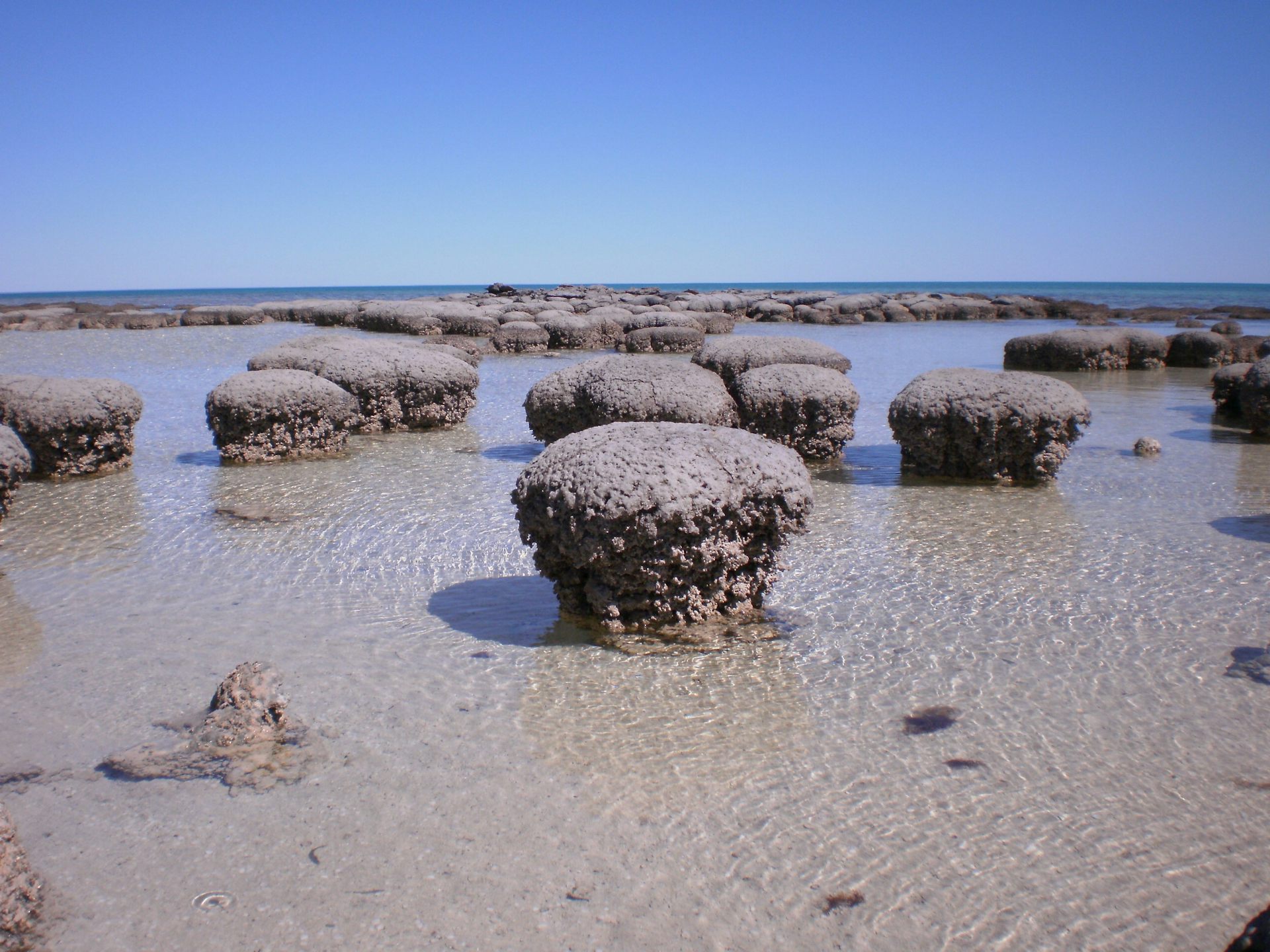
On the shores of the west coast of Australia lies a window to our past: the stromatolites and microbial mats of Gathaagudu (Shark Bay) .
在澳大利亚西海岸的岸边,藏着一扇通往我们过去的窗口:就是加塔古杜(鲨鱼湾)的石岩和微生物垫。
To the untrained eye they look like a collection of rocks and slime – but they are in fact teeming with microbial life. And these stromatolites are living “relics” of ancient ecosystems that thrived on Earth billions of years ago.
对未经训练的眼睛来说,它们看起来只是一堆岩石和黏液——但事实上,它们充满了微生物生命。而这些石岩是数十亿年前地球上繁盛的古代生态系统的“活化石”。
If you wade past, it feels like you’re walking back through time. In fact, the first bubbles of oxygen that filled the atmosphere on early Earth likely came from ancient stromatolites. You could say we owe our very existence to these piles of rocks.
如果你涉水走过,感觉就像是穿越回了时间。事实上,早期地球大气层中最初的氧气泡很可能就来源于古代石岩。可以说,我们赖以生存的这一切,都归功于这些岩石堆。
So, what other secrets of our past could these ecosystems tell us? Through decades of research, we know how early life has woven its path through these “living rocks”. But most recently our team embarked on the greatest genealogy search of them all: searching for our great microbial ancestors, the Asgard archaea.
那么,这些生态系统还能告诉我们哪些关于过去的秘密呢?经过数十年的研究,我们了解了早期生命是如何在这片“活石”中编织出其路径的。但最近,我们的团队开始了迄今为止最宏大的“族谱搜索”:寻找我们伟大的微生物祖先——阿斯加德古菌。
And in a new paper, published today in the journal Current Biology, we report how this search led to the discovery of a key clue that could help explain how complex life evolved on Earth.
在今天发表于《当前生物学》(Current Biology)期刊的一篇新论文中,我们报告了这次搜索如何促成了发现一个关键线索,该线索有助于解释复杂生命如何在地球上进化。
The cells that comprise complex life
构成复杂生命的细胞
Asgard archaea were originally named after Norse gods. This fascinating group of microbes sits on the cusp of one of the most significant events in the evolution of life: the origin of the complex cells that make up plants and animals, known as eukaryotes.
阿斯加德古菌最初是以北欧神祇命名的。这个迷人的微生物群落处于生命进化史上最重要的事件之一的边缘:即构成植物和动物的复杂细胞,也就是真核生物的起源。
Evidence suggests Asgard archaea are the closest relatives of eukaryotes. And that on an early Earth it was the “marriage” of an ancient Asgard archaeon and a bacterium that led to the first eukaryotes.
证据表明,阿斯加德古菌是真核生物最近的亲属。并且,在早期地球上,正是古老的阿斯加德古菌和细菌的“结合”,促成了第一个真核生物的诞生。
They formed an ancient partnership. They shared resources and physically interacted, leading to the first complex cells. Like a Romeo and Juliet tale of two distant families coming together, Asgard archaea and bacteria decided it was time to break from traditional family values.
它们形成了一种古老的伙伴关系。它们共享资源并进行物理互动,从而产生了最初的复杂细胞。就像罗密欧和朱丽叶的故事一样,两个遥远的家族走到了一起,阿斯加德古菌和细菌决定打破传统的家族模式。
But we have never seen a model of how this may have occurred. Until now.
但我们从未见过关于这可能如何发生的模型。直到现在。
Holding up a mirror to the ancient past
映照古代的镜子
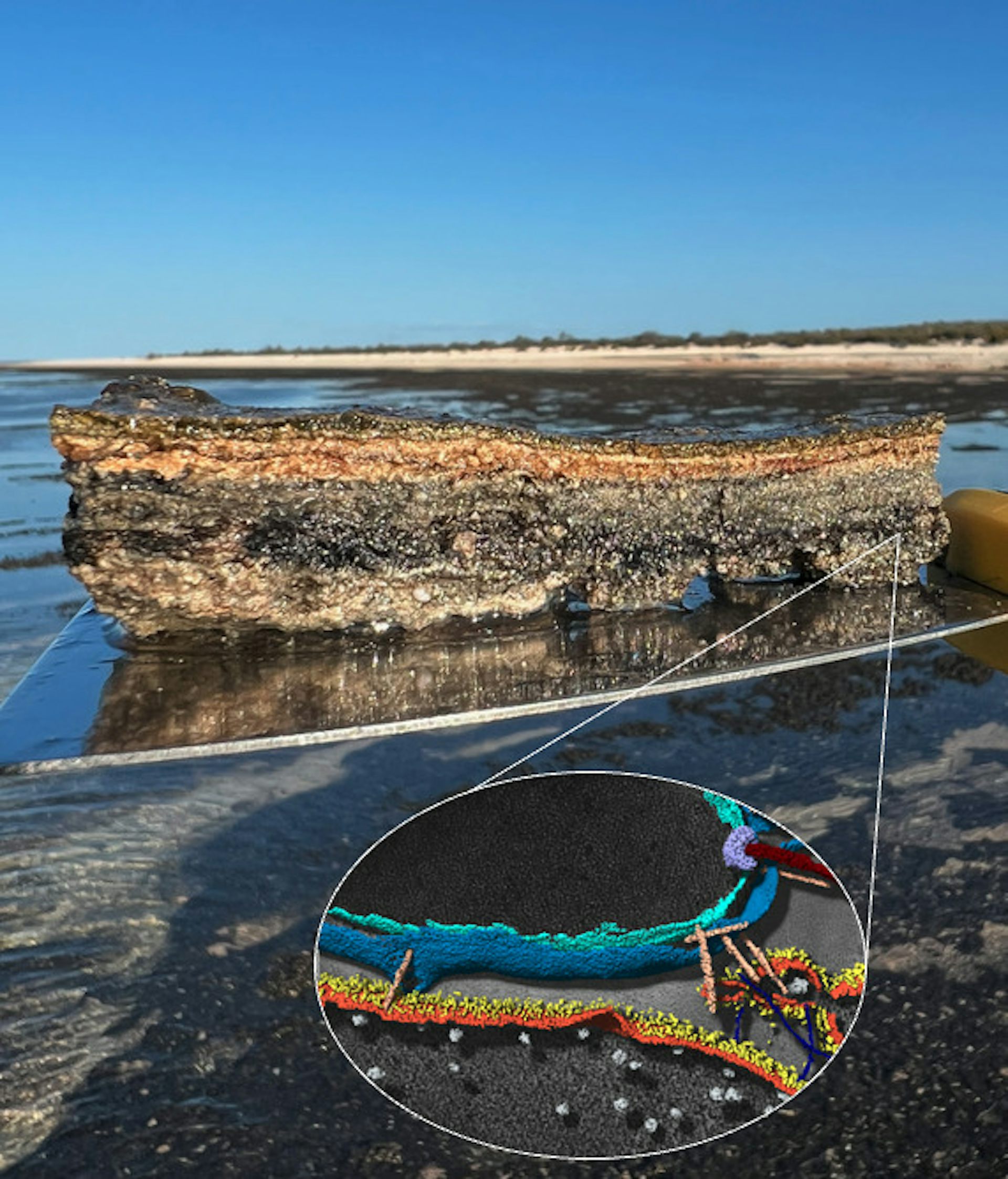
Our team used the mats of Shark Bay as a “seed” to establish cultures of these ancient microbes. We are one of only four groups worldwide to achieve this, through years of research with a dedicated team of graduate students nurturing the Asgards like offspring.
我们的团队利用鲨鱼湾的微生物垫作为“种子”,建立了这些古代微生物的培养物。我们是全球仅有的四个团队之一,通过多年研究,由一群敬业的研究生像养育后代一样培育着阿斯加德菌群,从而实现了这一目标。
But the Asgards were not alone. We found them together with a sulphate-loving bacterium. Could this be a model of how complex life may have started on a primitive Earth?
但阿斯加德菌群并非孤立存在。我们发现它们与一种嗜硫酸细菌一起存在。这是否可以成为一个关于复杂生命如何在原始地球上起源的模型?
We began by sequencing the Asgards’ DNA to decipher exactly how these microbes tick at the genetic level. We also used artificial intelligence to model how proteins could have behaved in a world before eukaryotes. Evidence suggested these two microbes were sharing nutrients. In other words, they were cooperating.
我们首先对阿斯加德菌群的DNA进行了测序,以解读这些微生物在基因层面上究竟是如何运作的。我们还利用人工智能来模拟在真核生物出现之前的世界中蛋白质可能如何表现。证据表明,这两种微生物正在共享营养物质。换句话说,它们正在协同合作。
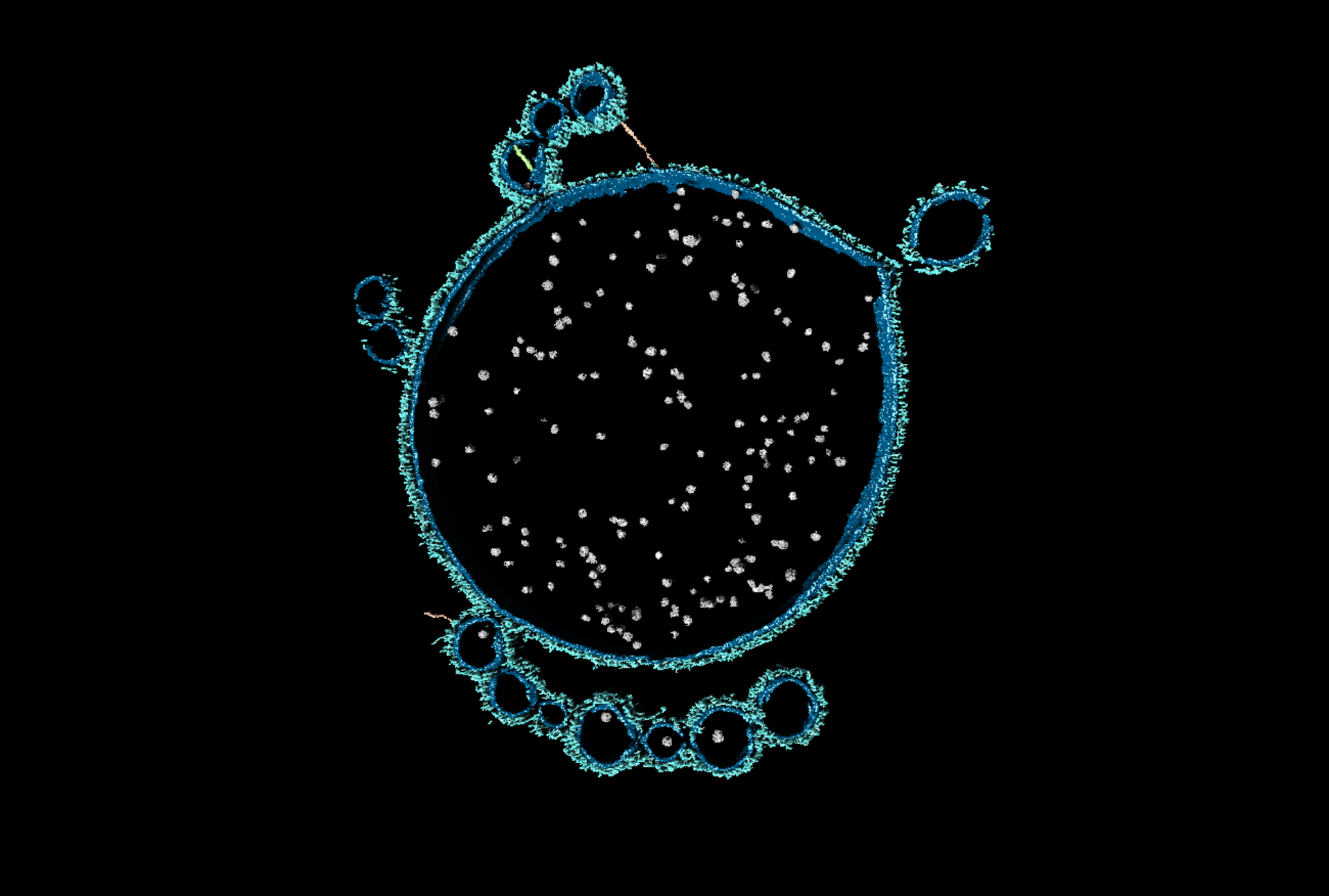
But we wanted to delve deeper. What do our great microbial ancestors look like? Here we turned to electron cryotomography, a high-resolution imaging approach that allowed us to observe cells and structures at a nanometre scale.
但我们想深入探究。我们的伟大微生物祖先是什么样子的?于是,我们采用了电子冷透射显微镜技术,这是一种高分辨率成像方法,使我们能够在纳米尺度观察细胞和结构。
And here we showed – for the first time – an Asgard archaeon and a bacterium directly interacting. Tiny nanotubes were connecting the two organisms – perhaps reflecting what their great-ancestors did on an early Earth that ultimately led to the explosion of complex life as we know it.
在这里,我们首次展示了阿斯加德古菌和细菌直接相互作用的场景。微小的纳米管连接着这两种生物——这或许反映了它们的远古祖先在早期地球上所做的事情,最终导致了我们所知的复杂生命的爆发。
Weaving western science with Indigenous knowledge
将西方科学与原住民知识相结合
This was a major discovery – one that originated in Gathaagudu, a World Heritage Site with significant environmental and cultural values.
这是一项重大发现——它起源于加塔古杜(Gathaagudu),这是一个具有重要环境和文化价值的世界遗产地。
Aboriginal people first inhabited Gathaagudu over 30,000 years ago. We wanted to recognise and celebrate the language of the Malgana people, one of the traditional language groups of Gathaagudu. We also wanted to connect western science with Indigenous Knowledge in a meaningful way.
原始人于3万多年前首次居住在加塔古杜。我们希望认可和颂扬马尔加纳人(Malgana)的语言,这是加塔古杜的传统语言群体之一。我们还希望以有意义的方式将西方科学与原住民知识联系起来。
To this end and working closely with the world’s foremost Malgana language expert, Kymberley Oakley, and Aboriginal elders, a name was granted for our novel Asgard archaeon from the language of the Malgana people: Nerearchaeum marumarumayae. The species name – marumarumayae – is derived from the Aboriginal language of the Malgana people, meaning “ancient home”, a reference to stromatolites being of ancient origin in Earth’s history.
为此,我们与世界顶尖的马尔加纳语言专家Kymberley Oakley以及原住民长老们密切合作,从马尔加纳人的语言中为我们新发现的阿斯加德古菌(Asgard archaeon)命名:Nerearchaeum marumarumayae。该物种名称——marumarumayae——源自马尔加纳人的原住民语言,意为“古老家园”,指的是石灰藻(stromatolites)在地球历史上具有古老起源。
Weaving Aboriginal language into the naming of our new microbe represents a fitting connection between unique Aboriginal culture in Australia and the ancient microbe discovered that calls the mats of Gathaagudu “home”.
将原住民语言融入我们新微生物的命名中,代表了澳大利亚独特的原住民文化与发现的、称加塔古杜的垫层为“家园”的古老微生物之间恰当的联系。
Gathaagudu is under threat from global change, from increased heatwaves, cyclonic events and human activity. And among the values to preserve and conserve are the significant Aboriginal connections as well as the trails of life going back through evolutionary time.
加塔古杜正受到全球变化、日益频繁的热浪、热带气旋事件和人类活动的威胁。需要保护和保存的价值包括重要的原住民联系,以及追溯进化时间线的生命足迹。
With our study we have peered into our past. And maybe like the Montagues and Capulets of Shakespeare, we see distant families of microbes coming together to bridge the divide and ultimately form the early eukaryotes that eventually led to us: a fragile branch on the evolutionary tree of life.
通过我们的研究,我们窥见了我们的过去。也许就像莎士比亚笔下的蒙塔古和凯普莱特家族一样,我们看到遥远的微生物家族汇聚在一起,弥合了鸿沟,最终形成了早期真核生物,并最终导致了我们:生命进化树上的一支脆弱的枝干。
Brendan Paul Burns receives funding from the Australian Research Council.
Brendan Paul Burns获得澳大利亚研究理事会的资助。
Kymberley Oakley does not work for, consult, own shares in or receive funding from any company or organisation that would benefit from this article, and has disclosed no relevant affiliations beyond their academic appointment.
Kymberley Oakley不为任何受益于本文的公司或组织工作、咨询、拥有股份或接受资金,并且除了其学术任命之外,未披露任何相关隶属关系。